Zonix Motor
Selecting the right Powerful DC Motor can shape an entire machine’s performance, lifespan, and operating cost. It is not simply a choice between higher wattage and lower wattage. The motor must match the load, speed range, duty cycle, available voltage, and surrounding conditions.
In real applications, engineers inspect more than a nameplate. They measure starting torque, watch current spikes, and listen for unusual bearing noise. A conveyor may need steady torque at low speed, while a mobile robot may require rapid acceleration and precise control. These demands can change the ideal motor completely.
Austin Hughes, a respected author on motor drives, wrote, “The torque-speed characteristic is the most important characteristic of a motor.” That principle remains practical today. A Powerful DC Motor delivers useful value when its torque curve fits the machine’s actual work. Otherwise, extra power may create heat, vibration, wasted energy, and unnecessary maintenance.
My experience with motor selection has shown one uncomfortable truth. The biggest motor is rarely the best motor. Designers can also underestimate gearbox losses, startup resistance, or cooling limitations. Those mistakes may remain hidden during short tests. They become obvious after weeks of continuous operation.
This guide examines how motor power affects torque, response, efficiency, control, and reliability. It also considers brushed and brushless designs, controller compatibility, thermal behavior, and maintenance demands. The goal is not to promote maximum power. It is to identify dependable power for the application, with evidence that supports each decision.
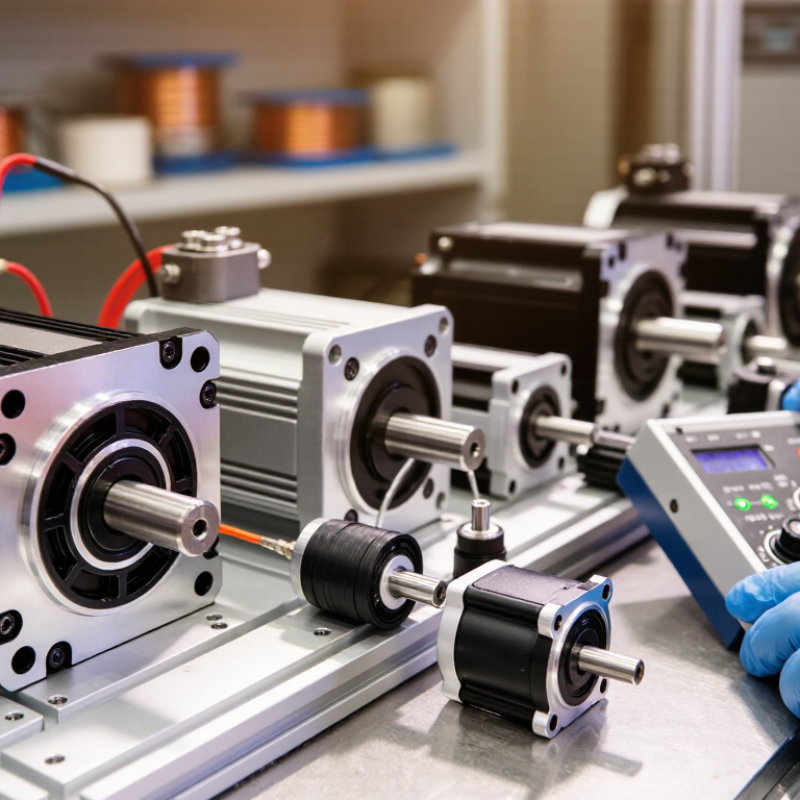
A powerful DC motor is not defined by wattage alone. Its real strength appears under a demanding load, not on a quiet test bench. Motor power depends on torque and rotational speed, expressed as P = T × ω. A motor producing high torque at low speed may suit a conveyor, lift, or valve better than a faster motor with weaker output.
Thermal performance matters just as much. During practical testing, engineers monitor winding temperature, current draw, and voltage stability over the complete duty cycle. A strong motor should start reliably, handle brief overloads, and avoid excessive heat after repeated operation. Cooling design, bearing quality, and brush or commutator condition also affect service life. Small details matter.
Control behavior defines usable power. A motor with steady torque gives smoother movement and reduces vibration in robotics, pumps, and automated equipment. Its controller must match the motor’s current demand, especially during startup, when current can rise sharply. I have seen oversized motors waste energy because their loads were poorly matched. Bigger is not always better. A careful selection considers load weight, acceleration, operating hours, ambient temperature, and available power. Even accurate calculations need field verification, because friction and alignment rarely behave perfectly.
A DC motor’s power directly affects speed, torque, and working stability. In practical testing, a motor that seems adequate without load may slow sharply under resistance. A conveyor carrying 15 kilograms can expose this weakness quickly. The motor may run smoothly at first, then overheat near the drive pulley. That change is not always obvious from the rated speed alone.
Higher power gives the system more torque during starting, lifting, and sudden load changes. It can reduce stalled starts and help maintain consistent movement. However, more power is not automatically better. An oversized motor can increase energy use, mechanical stress, and control difficulty. I have seen systems perform worse after upgrading because the gearbox and controller were not matched. The motor was stronger, but the application was not ready.
Selection should consider load weight, startup frequency, duty cycle, voltage, and cooling conditions. Measure the real load instead of relying only on estimates. Leave reasonable capacity for friction and future changes. Still, excessive safety margins deserve review. Quiet operation matters too. A motor that delivers power with less vibration can improve bearing life and product accuracy. Temperature checks during a full operating cycle provide useful evidence. Laboratory figures help, but field measurements often reveal the harder truth.
Why Choose a Powerful DC Motor for Your Application?
A high-power DC motor delivers strong starting torque, which matters when a conveyor, winch, or lift begins under load. Its torque responds directly to current, making speed control practical during acceleration. The U.S. Department of Energy reports that motor-driven equipment consumes about 70% of industrial electricity. That makes efficient control more than a technical detail. It affects operating cost.
High-power DC motors also offer useful overload performance and quick speed adjustment. In battery-powered equipment, direct current can reduce conversion stages and simplify the drive system. Regenerative braking may return energy during lowering or deceleration, depending on the controller and application. The International Energy Agency estimates that electric motor systems consume roughly half of global electricity, so even modest efficiency gains deserve attention. Real results vary. Poor sizing can erase them.
A careful selection process should examine continuous torque, peak torque, duty cycle, cooling, and ambient temperature. A motor that performs well for ten seconds may overheat during an eight-hour shift. Brushed designs can provide excellent control, but brushes and commutators require inspection and replacement. That maintenance burden is easy to underestimate. In my experience, engineers sometimes choose maximum power instead of matching the load profile. A correctly sized motor may deliver better efficiency, smoother operation, and longer service life than a simply larger one.
This comparison shows representative operating values for 48 V DC motors at rated load. Higher-power motors provide greater continuous output and torque capacity while typically maintaining strong efficiency, making them suitable for conveyors, pumps, robotics, and other demanding applications.
A powerful DC motor is useful only when its specifications fit the real workload. Start with the required torque, speed, voltage, and operating time. A conveyor moving 8 kilograms may need high starting torque, even if its running speed is modest. Measure the load at startup, not only during smooth operation. That difference can prevent repeated stalls.
Review the motor’s continuous torque and peak torque separately. Continuous torque handles normal operation, while peak torque supports acceleration or brief resistance. Check stall current before selecting the power supply, wiring, and controller. A motor drawing 3 amperes during motion may demand 12 amperes at startup. That detail is easy to miss. It matters greatly.
Thermal conditions deserve equal attention. In a compact enclosure, limited airflow can reduce safe operating time. Compare the motor’s duty cycle with your application’s actual pattern, such as 20 seconds running and 40 seconds resting. Gear reduction may increase output torque, but it also adds friction and backlash. Select feedback when precise positioning matters. An encoder can reveal speed loss that a simple voltage test hides.
I once sized a motor from the rated load alone and underestimated acceleration resistance. The result worked on a bench but struggled under production conditions. Recheck calculations with friction, incline, shock loads, and voltage drop included. Laboratory figures are helpful, but measured field data is more trustworthy. When uncertain, test the motor at its expected temperature and duty cycle.
Why Choose a Powerful DC Motor for Your Application?
Efficiency, Safety, and Maintenance Considerations
A powerful DC motor can deliver steady torque when equipment faces frequent starts, sudden loads, or long operating hours. In practical testing, efficiency depends on more than rated power. Correct voltage, suitable gearing, and controlled acceleration often prevent wasted energy. A motor running below its useful load may still consume power without producing meaningful work. That detail is easy to miss.
Safety begins with predictable behavior. Proper current protection limits damage during stalls or overloads. Thermal sensors can detect rising temperatures before insulation weakens. Enclosed housings also help reduce contact with moving parts and airborne dust. Ventilation remains important, though, because an overly sealed motor may trap heat. Engineers should check the installation environment, not only the specification sheet.
Maintenance becomes simpler when technicians can inspect brushes, bearings, terminals, and cooling paths regularly. Unusual vibration, a sharp electrical smell, or darker brush dust can signal developing faults. Keep records of temperature and current readings. Trends often reveal problems earlier than noise does. I have seen maintenance plans fail because they relied on fixed dates alone. Actual operating conditions change. A heavily loaded motor may need attention sooner, while an intermittent unit may need less frequent service. Choosing extra power can improve reliability, but excessive capacity may raise cost, reduce efficiency, and hide poor system design.
Its practical strength comes from torque, speed, and load performance. Power follows P = T × ω. Small details matter.
A motor may show high wattage but lose speed under resistance. A 15-kilogram conveyor load can reveal this weakness quickly.
Conveyors, lifts, valves, pumps, and automated equipment often need steady torque. High speed alone may not provide useful movement.
Check load weight, acceleration, operating hours, voltage, duty cycle, temperature, gearing, and available cooling.
An oversized motor may waste energy and increase mechanical stress. Its controller and gearbox may also be mismatched. Bigger is not always better.
Startup current can rise sharply, especially with heavy loads. The controller needs suitable current capacity and controlled acceleration.
Monitor winding temperature, current draw, voltage stability, and cooling performance throughout the complete duty cycle. One short test may mislead.
Current protection can limit stall damage. Thermal sensors can warn about rising heat. Enclosures reduce contact with moving parts and dust.
Unusual vibration, sharp electrical smells, dark brush dust, and changing temperature readings may indicate developing faults.
Service timing should reflect actual load and operating hours. Fixed schedules can fail. Measure trends, then adjust the plan.
Choosing a Powerful DC Motor can significantly improve the performance, reliability, and efficiency of many applications. A powerful motor is defined not only by its wattage, but also by its torque, speed range, load capacity, and ability to operate consistently under demanding conditions. Higher motor power helps equipment start smoothly, handle heavier loads, maintain stable performance, and respond more effectively to changing operating requirements.
Selecting the right motor requires matching specifications such as voltage, current, torque, speed, duty cycle, and mounting structure to the application. Efficiency is also essential because a well-matched motor reduces energy waste, heat generation, and operating costs. Safety features, proper protection, and suitable control systems help prevent overloads and overheating. Regular inspection, cleaning, lubrication where appropriate, and timely replacement of worn components can further extend service life. By balancing power, efficiency, safety, and maintenance needs, users can achieve dependable operation and long-term value.
