Zonix Motor Zonix Motor

Top 10 Industrial Motor Manufacturers for Global Buyers?

Time:2026-09-10 Author:Liam
0%

Selecting the right Industrial Motor manufacturer can affect production uptime, energy costs, and long-term maintenance budgets. For global buyers, the decision involves more than comparing catalog prices. Motor efficiency, torque performance, enclosure protection, voltage compatibility, and delivery capability all deserve careful attention.

This guide introduces the Top 10 Industrial Motor Manufacturers for Global Buyers. It examines established companies with proven experience across manufacturing, water treatment, mining, oil and gas, logistics, and renewable energy applications. Each manufacturer is considered through practical criteria, including IEC or NEMA compliance, IE efficiency classes, product customization, testing procedures, warranty support, and regional service coverage.

Real operating conditions matter. A motor running beside a dusty conveyor needs different protection from one installed in a clean factory. Temperature, vibration, load cycles, and available maintenance skills can change the best choice. Buyers should also verify technical documents, certifications, spare-parts access, and distributor reliability before signing a contract.

No ranking is perfect.

A respected brand may still provide uneven support across regions. A lower-cost supplier may offer impressive specifications but limited field service. These details are easy to overlook during procurement, especially when quotations appear similar. This overview aims to provide a balanced starting point, not a substitute for engineering review. By comparing measurable performance with real purchasing experience, global buyers can narrow their options and identify a manufacturer suited to their equipment, site conditions, and business risks.
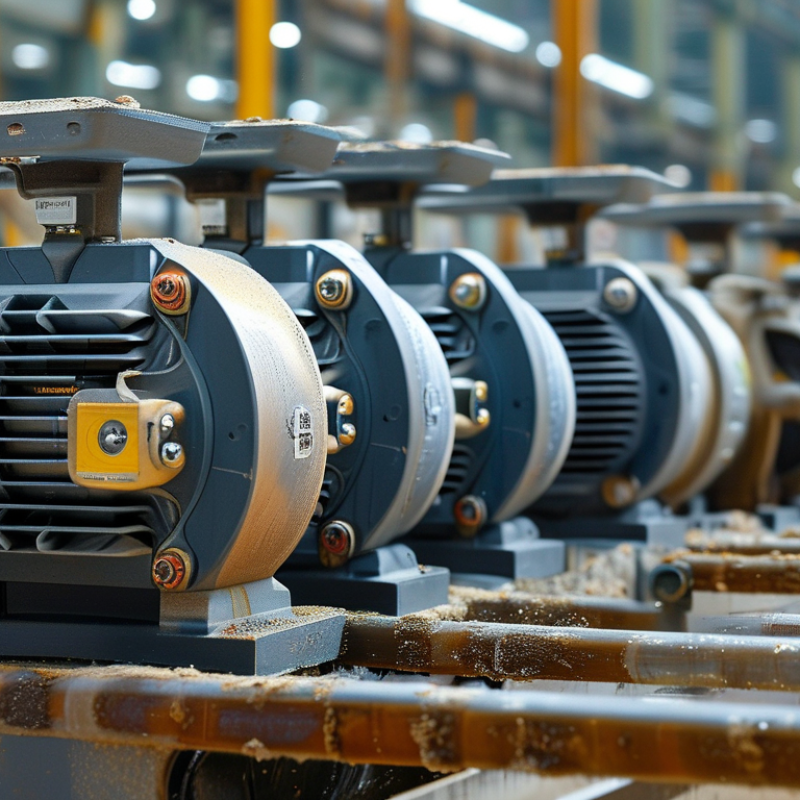
Top 10 Industrial Motor Manufacturers for Global Buyers?

Industrial Motor Manufacturers: Industry Scope, Product Types, and Global Demand

Top 10 Industrial Motor Manufacturers for Global Buyers

Industrial motor manufacturing covers a wide field, from compact machines to high-power drive systems. Global buyers often compare efficiency, torque, duty cycles, and maintenance requirements. A low purchase price rarely tells the complete story.

Product types include induction motors, synchronous motors, brushless motors, servo motors, and explosion-resistant designs for controlled industrial environments. Each type suits a different workload. Induction motors support pumps, fans, compressors, and conveyor lines. Servo motors deliver precise movement in packaging, robotics, and automated assembly. Large synchronous motors can improve power performance in continuous production equipment.

Industry scope is expanding through factory automation, water treatment, renewable energy, logistics, and process manufacturing. Demand is also shifting toward high-efficiency motors and intelligent monitoring. Sensors can track vibration, temperature, and current changes before a failure stops production. In practice, buyers should inspect service access, spare-part availability, voltage compatibility, and local technical support. These details matter on a noisy factory floor.

No ranking is perfect. A manufacturer with strong laboratory testing may still provide weak regional support. Buyers should request test records, lifecycle data, installation guidance, and references from similar facilities. Certification requirements also vary by market and application. I have found that energy calculations can be overlooked when teams focus only on the initial quotation. That mistake becomes expensive during years of daily operation. Even a well-designed motor may underperform when alignment, cooling, or load selection is poor.

How to Evaluate Motor Manufacturers for Different Industrial Applications

Choosing among the top 10 industrial motor manufacturers requires more than comparing catalog prices. Match each manufacturer to the application, not just the horsepower rating. A conveyor motor may need high starting torque, while a pump motor may prioritize continuous efficiency. For a dusty plant, check the enclosure rating, cooling method, and corrosion protection. For variable-frequency drive operation, request insulation details and documented inverter compatibility.

Experienced buyers examine test reports, dimensional drawings, efficiency data, and production traceability. Ask how the manufacturer verifies winding quality, bearing temperature, vibration, and noise. A factory audit can reveal practical details, such as spare-part storage and final inspection procedures. Certification matters, but it should support real evidence. A certificate alone is not proof of dependable performance.

Service capability often separates suitable manufacturers from attractive suppliers. Confirm response times, warranty terms, repair support, and local technical coverage before signing. Ask for references from facilities with similar loads and operating hours. A low purchase price can become expensive after repeated downtime. However, not every premium option is better. I have seen specifications look perfect while installation support remained weak. Leave room for doubt. Test a sample motor under realistic load, record its temperature and vibration, and compare the results with the promised values.

Top 10 Industrial Motor Manufacturers and Their Core Strengths

Top 10 Industrial Motor Manufacturers for Global Buyers?

The top ten industrial motor manufacturers differ mainly in engineering focus. One excels at high-efficiency induction motors for pumps and compressors. Another builds rugged motors for dusty cement plants and steel mills. A third specializes in compact servo motors, supporting accurate motion on packaging lines. One manufacturer is known for medium-voltage systems used in large fans and conveyors. Its testing process often includes heat-rise checks and vibration monitoring.

Another supplier focuses on explosion-protected designs for approved hazardous industrial zones. A sixth combines motors with variable-frequency drives, helping factories control speed and reduce energy waste. A seventh offers customized motors for cranes, hoists, and harsh starting conditions. Strong documentation matters here. Clear drawings save time during installation.

The remaining manufacturers often compete through service. One maintains regional repair centers, while another provides remote condition monitoring for bearings and insulation. The tenth focuses on efficient motors for water treatment, refrigeration, and building systems.

Buyers should compare rated efficiency, duty cycle, enclosure protection, cooling method, and spare-part availability. Ask for test records.

Real projects reveal uncomfortable details. A technically excellent motor can still fail when the shaft alignment is poor. I have seen procurement teams choose low prices, then struggle with unavailable bearings. Manufacturer reputation helps, but it cannot replace site measurements and maintenance planning.

Some product claims also need independent verification. The strongest supplier is not always the largest; it is the one that matches the motor to the load, environment, and service capability.

Global Comparison of Manufacturing, Certifications, Service, and Delivery

Choosing among the top 10 industrial motor manufacturers requires more than comparing catalog prices. Global buyers should examine factory capacity, winding equipment, testing laboratories, and quality controls. A reliable manufacturer can explain its production process clearly. Ask for test records covering efficiency, vibration, temperature rise, insulation, and load performance. Factory visits or live video inspections add valuable evidence.

Certifications also need careful checking. Look for relevant IEC or equivalent national standards, plus current ISO quality and environmental certificates. Do not accept certificate images without verification. Certification scope matters. It may cover one facility, not every production site. Delivery depends on more than advertised lead times. Buyers should review component availability, export packaging, port access, customs documents, and spare-parts planning. Service quality becomes visible after installation. Strong suppliers provide commissioning guidance, fault analysis, replacement parts, and trained technical contacts across time zones. Still, communication can fail when responsibility is unclear.

Tips: Request a sample inspection report and a realistic production schedule. Compare warranty terms, response times, and service coverage in writing. Ask how the supplier handles voltage differences, humidity, altitude, and local grid conditions. These details often reveal practical experience. One weakness in this comparison is that public information may not reflect current factory performance. A polished website proves little. Independent audits are better, although they increase purchasing time and cost. Buyers should also calculate lifecycle expenses, including energy use, maintenance, downtime, and transport. The cheapest motor can become expensive after repeated repairs or delayed delivery. Expect some uncertainty, and document every assumption before approving the order.

This standards-based benchmark compares representative full-load efficiency levels for IEC 60034-30-1 motor efficiency classes. Actual efficiency varies by rated power, speed, voltage, frequency, and motor design. Certification, service capability, and delivery performance should be verified separately during supplier qualification.

How Global Buyers Can Select the Right Industrial Motor Supplier

Top 10 Industrial Motor Manufacturers for Global Buyers

Choosing the right industrial motor supplier requires more than comparing prices or browsing a top-ten list. Global buyers should match the motor to the actual operating environment. Check load type, starting torque, duty cycle, voltage, frequency, enclosure rating, and cooling method. A motor running a conveyor in a dusty plant faces different demands from one driving a clean-room pump.

Ask suppliers for verified performance data, dimensional drawings, test reports, warranty terms, and spare-parts availability. Clear documentation reduces installation mistakes and supports maintenance teams across different time zones. Evaluate production consistency, quality-control procedures, delivery reliability, and technical support. A supplier may offer an efficient motor, but slow responses can become expensive during an unexpected shutdown.

Tips: Request a sample datasheet before placing a large order. Confirm shaft dimensions, mounting details, insulation class, and noise limits. Ask how the supplier handles failure analysis. Inspect packaging requirements for long-distance transport. Do not rely only on efficiency labels; actual performance depends on installation and load. No checklist is perfect. A spreadsheet can look complete while missing a small but costly detail, such as incompatible bearings or local service limitations. Get an independent engineer to review critical applications.

Top 10 Industrial Motor Selection Criteria for Global Buyers: How to Select the Right Supplier
Rank Supplier Evaluation Dimension Recommended Technical or Commercial Benchmark Why It Matters to Global Buyers Verification Documents or Evidence Priority
1 Application and Duty-Cycle Matching Motor rating, torque, speed, starting method, load profile, ambient conditions, and duty type should match the application. IEC duty types include S1 continuous duty and S2–S10 short-time or intermittent operating duties. Incorrect duty selection can cause overheating, shortened insulation life, nuisance trips, or premature motor failure. Completed motor-sizing sheet, load data, duty-cycle calculation, application questionnaire, and technical approval drawing. Critical
2 Efficiency and Total Cost of Ownership Compare rated efficiency at relevant load points using the applicable efficiency classification, such as IE2, IE3, or IE4 under IEC 60034-30-1 where applicable. Purchase price is only one part of cost; electricity, operating hours, maintenance, and expected service life often have a larger financial impact. Efficiency test report, nameplate data, loss data, energy-cost model, and applicable efficiency declaration. Critical
3 Standards, Certification, and Market Compliance Products should comply with the standards and legal requirements of the destination market, including applicable IEC, NEMA, CE, UL, CSA, UKCA, or local requirements. Compliance reduces customs, installation, insurance, and product-liability risks when equipment is shipped across borders. Declaration of conformity, certification records, test reports, technical file, and destination-market compliance checklist. Critical
4 Electrical and Mechanical Configuration Confirm voltage, frequency, phase, rated current, speed, frame size, mounting arrangement, shaft dimensions, enclosure type, terminal-box position, and cooling method. Matching the mechanical and electrical interface helps prevent costly redesign, adapters, installation delays, and compatibility problems. Approved dimensional drawing, wiring diagram, motor data sheet, interface specification, and sample inspection record. Critical
5 Environmental Protection and Thermal Capability Select the required IP protection level, insulation class, temperature rise, ambient-temperature range, altitude rating, corrosion protection, and hazardous-area suitability where required. Dust, moisture, heat, chemicals, altitude, and explosive atmospheres can significantly affect reliability and safe operation. IP test evidence, thermal test report, insulation-system specification, paint or coating specification, and hazardous-area certificate if applicable. Critical
6 Variable-Speed Drive and Starting Compatibility For inverter-fed applications, verify inverter-duty insulation, bearing-current protection, minimum and maximum operating speed, cooling performance, braking requirements, and electromagnetic compatibility. Motors connected to variable-frequency drives may experience additional voltage stress, bearing currents, vibration, and thermal loading. Drive-compatibility statement, insulation-system data, speed-torque curve, bearing-protection specification, and EMC test information. High
7 Quality Management and Production Control Evaluate documented quality processes, traceability of critical components, calibration control, incoming inspection, process inspection, and final testing. Consistent manufacturing controls reduce variation between production batches and improve reliability in repeat orders. Quality certificate such as ISO 9001, quality manual, inspection and test plan, calibration records, and sample final-test report. High
8 Testing, Inspection, and Traceability Routine tests should cover applicable electrical and mechanical checks, such as winding resistance, insulation resistance, no-load performance, vibration, noise, and bearing condition. Clear test records provide objective evidence that each shipment meets the agreed specification before dispatch. Routine-test certificate, type-test report where required, serial-number traceability, inspection checklist, and nonconformance procedure. High
9 Delivery Capability and Supply-Chain Resilience Assess realistic lead times, production capacity, component availability, packaging standards, export experience, spare-parts availability, and contingency planning. Reliable delivery is essential for replacement projects, planned shutdowns, production expansion, and geographically distributed operations. Lead-time quotation, production schedule, packaging specification, logistics plan, capacity statement, and business-continuity information. High
10 Warranty, Technical Support, and Lifecycle Service Review warranty duration and scope, response times, troubleshooting procedures, spare-parts support, repair capability, documentation quality, and training availability. Fast technical support and accessible spare parts can reduce downtime and improve the motor’s lifecycle value after commissioning. Warranty terms, service-level agreement, spare-parts list, troubleshooting guide, maintenance manual, and escalation contacts. Medium
Note: The benchmarks should be adapted to the motor type, application, destination-market regulations, installation environment, and applicable edition of the relevant standards.

FAQS

: What should global buyers compare beyond catalog price?

: Compare factory capacity, winding equipment, testing laboratories, and quality-control procedures. Request records for efficiency, vibration, temperature rise, insulation, and load performance. Price alone misleads.

How can buyers verify manufacturing claims?

Request a sample inspection report and a realistic production schedule. Consider a factory visit or live video inspection. Independent audits offer stronger evidence, but they add time and cost.

Which certifications deserve attention?

Check relevant IEC or equivalent national standards. Verify current ISO quality and environmental certificates independently. Confirm the certificate’s scope. It may cover one facility only.

How should buyers match a motor to its application?

Check load type, starting torque, duty cycle, voltage, frequency, enclosure rating, and cooling method. A dusty conveyor needs different protection from a clean-room pump. Small mismatches matter.

What technical documents should a supplier provide?

Ask for verified performance data, dimensional drawings, test reports, warranty terms, and spare-parts details. Confirm shaft dimensions, mounting points, insulation class, and noise limits. Drawings prevent installation errors.

What affects delivery reliability?

Review component availability, production capacity, export packaging, port access, customs documents, and spare-parts planning. Ask for dates based on actual production conditions. Advertised lead times can be optimistic.

How can buyers evaluate after-sales service?

Compare commissioning guidance, fault analysis, replacement parts, response times, and trained technical contacts. Get service coverage and warranty responsibilities in writing. Unclear ownership causes delays.

What hidden costs should buyers calculate?

Include energy use, maintenance, downtime, transport, and repeated repairs. A cheaper motor may cost more during long shutdowns. No checklist is perfect. Have an independent engineer review critical applications.

Conclusion

This article provides a practical overview of the Industrial Motor market, including major product types, common industrial applications, and the factors driving demand across global regions. It explains how motors support manufacturing, energy, water treatment, transportation, automation, and other essential operations. Readers will also learn how to evaluate manufacturers based on technical performance, efficiency, durability, customization capability, quality control, certifications, and experience with specific operating environments.

The guide compares the strengths of leading manufacturers without focusing on brand promotion, highlighting differences in production capacity, engineering support, service networks, delivery reliability, and international compliance. It concludes with a buyer-focused framework for selecting the right supplier, including motor specifications, operating conditions, lifecycle costs, maintenance requirements, communication, and after-sales support. By using these criteria, global buyers can reduce procurement risks, improve equipment performance, and establish dependable long-term partnerships with suitable Industrial Motor manufacturers.

Liam

Liam

Liam is a dedicated marketing professional with a profound expertise in the industry, where he excels at highlighting the unique advantages of our core products. With a keen understanding of market trends and consumer needs, Liam frequently updates our company’s professional blog, providing......