China has become a major manufacturing base for AC Gear Motor solutions used in conveyors, packaging lines, warehouse systems, and automated equipment. Buyers often see identical-looking housings, yet internal differences matter. Gear materials, bearing quality, winding temperature, sealing, noise, and service support can change operating results.
The International Energy Agency has reported that electric motor systems consume nearly half of global electricity. The U.S. Department of Energy also identifies motor-driven equipment as a major industrial energy user. These figures explain why efficiency, duty cycle, and correct gearbox selection deserve serious attention. MarketsandMarkets and Grand View Research both identify continued growth in electric motor demand, driven by automation, energy management, and industrial modernization. The numbers are persuasive, but forecasts are not guarantees.
This China Top 10 AC Gear Motor Manufacturers guide evaluates suppliers through practical buyer criteria. These include manufacturing experience, IEC compatibility, quality systems, product customization, testing capacity, export history, and after-sales responsiveness. Factory audits matter. So do sample tests under real loads. A polished catalogue can hide weak technical support.
Some rankings remain subjective.
The selection should therefore support due diligence, not replace it. Buyers should verify torque curves, reduction ratios, insulation classes, ingress protection, efficiency data, and delivery terms before signing contracts. A supplier may be excellent for a 90-watt conveyor motor but unsuitable for continuous heavy-duty operation. That distinction is easy to miss. This guide aims to make comparison clearer, while acknowledging that application conditions, regional standards, and long-term service performance can still change the final decision.
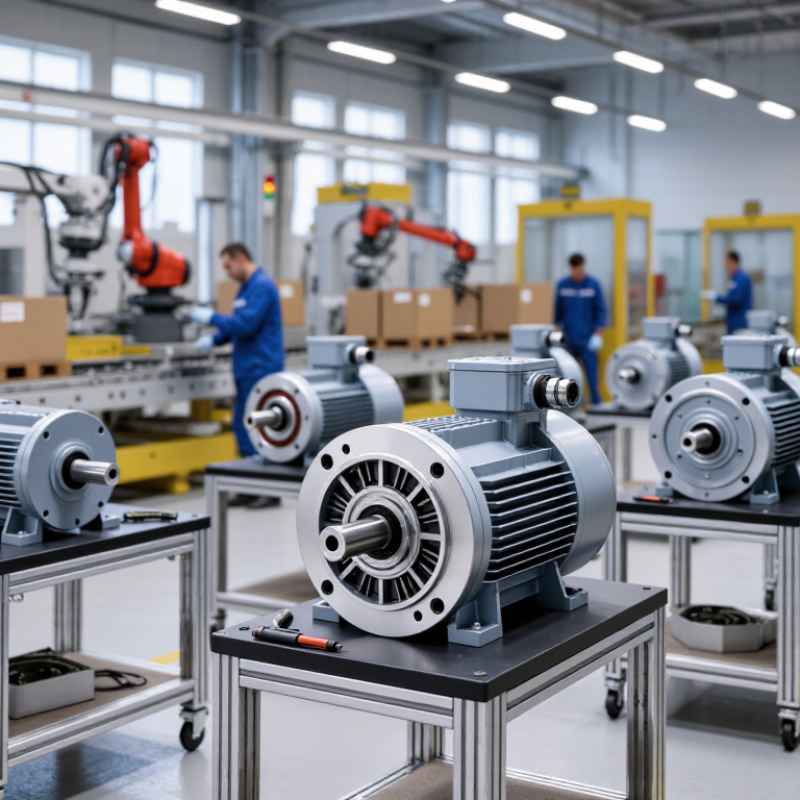
AC Gear Motors: Types, Ratings, and Global Buyer Requirements
China Top 10 AC Gear Motor Manufacturers for Global Buyers
AC Gear Motors: Types, Ratings, and Global Buyer Requirements
AC gear motors combine an induction motor with a reduction gearbox. Common types include helical, worm, parallel-shaft, and planetary designs. Helical units usually deliver better efficiency, while worm gears offer compact right-angle transmission. Planetary models suit demanding torque applications, but their purchase cost is higher.
Buyers should compare rated power, output torque, speed, gear ratio, service factor, and duty cycle. Continuous S1 operation needs stronger thermal performance than occasional indexing. Voltage and frequency must match the destination grid, such as 230 V at 50 Hz or 460 V at 60 Hz. Check the enclosure rating too. An IP55 motor may suit dusty workshops, but washdown areas often require greater protection. Noise, vibration, brake options, shaft dimensions, and mounting position also affect installation.
Real purchasing experience shows that a clean datasheet is not enough. Ask for efficiency data, insulation class, temperature-rise limits, test reports, drawings, and traceable quality records. Confirm whether torque values are theoretical or tested at the output shaft. Small details matter. Packaging should protect bearings from moisture during long sea transport. Spare gears, seals, and clear maintenance instructions can reduce downtime. Yet buyers sometimes over-specify the motor, increasing cost without improving performance. A practical load profile, local service capability, and honest discussion of uncertain operating conditions usually produce a safer selection.
China’s Top 10 Manufacturers Ranked by Five Technical and Export Criteria
China Top 10 AC Gear Motor Manufacturers for Global Buyers
China’s top 10 AC gear motor manufacturers should be judged by
five practical criteria.
These include torque stability, energy efficiency, gearbox durability, quality traceability, and export performance.
The International Energy Agency’s Energy Efficiency 2023 report estimates that electric motor systems consume about
53% of global electricity.
Therefore, efficiency is not a minor specification.
The ranking also checks compliance with IEC 60034-30-1 efficiency classes, factory testing records, and documented material control.
Export capability receives equal attention. UN Comtrade data consistently places China among the world’s leading exporters of electric motors and related equipment.
However, shipment volume alone proves little. A supplier with repeat export records, clear manuals, spare-part planning, and stable lead times deserves stronger consideration.
The World Bank’s 2023 Logistics Performance Index also shows why delivery visibility matters for international buyers.
Tips:
Request a load test report, efficiency data, noise readings, and a sample packing list.
Check whether the stated torque matches real operating conditions.
Ask for references from similar climates and duty cycles.
Cheap units can become expensive after installation.
A ranking is never perfect. Some suppliers publish excellent data, yet provide limited field evidence.
Buyers should compare factory documents with independent inspection results before placing large orders.
This extra step often reveals differences in bearings, seals, paint thickness, and thermal protection.
IEC 60034-30-1 Efficiency Classes: IE2, IE3, and IE4 Performance
China’s AC Gear Motor Manufacturers for Global Buyers
IEC 60034-30-1 gives buyers a practical way to compare motor efficiency. IE2 means high efficiency, while IE3 delivers premium efficiency. IE4 reaches a higher performance level under defined test conditions. These classes apply mainly to the motor, not the complete gear motor assembly.
The gearbox matters. Gears, bearings, seals, and lubrication can reduce the power reaching the output shaft. A compact IE3 motor may still consume more energy than expected if the reducer has poor mechanical efficiency. Buyers should check rated output, speed, torque, duty cycle, voltage, frequency, and ambient temperature. These details affect real performance. An IE4 motor also costs more, so its energy savings should match the operating hours.
Ask for evidence. Reliable manufacturers should provide test data, efficiency maps, dimensional drawings, and clear tolerances. Confirm whether the figures come from direct line operation or inverter control. Request details for the exact motor size and pole count, not a similar model. In practical sourcing, catalog values can look impressive but remain incomplete. I have found that gearbox efficiency is often discussed less than motor class. That deserves more attention. Small details matter. A supplier’s traceable testing process, technical response, and after-sales documentation can reveal more than a polished product page. One point remains easy to miss: IE ratings do not automatically guarantee lower system energy use in every application.
Key Specifications: 50/60 Hz, 220–480 V, IP55, and 3–200 RPM
China Top 10 AC Gear Motor Manufacturers for Global Buyers
For global buyers comparing China’s top AC gear motor manufacturers, specifications should guide the first screening. A motor rated for 50/60 Hz supports different regional power systems. Confirm this detail before discussing price. Frequency affects operating speed, heating, and control compatibility.
Voltage range matters just as much. Many industrial models accept 220–480 V, but the exact connection method can vary. Check phase type, rated current, and terminal design. A 400 V motor may perform well in one factory, yet require careful protection elsewhere. Do not treat a wide voltage range as automatic compatibility.
IP55 protection helps resist dust and low-pressure water jets. It is useful near conveyors, packaging lines, and dusty workshops. However, IP55 does not mean waterproof operation. The gearbox also needs suitable sealing and regular inspection. Speed selection usually spans 3–200 RPM, depending on gear ratio and motor frequency. Low-speed applications need adequate output torque, not simply a lower RPM number. I have seen buyers choose speed first and regret the weak starting performance. That is an easy mistake.
Ask manufacturers for test records, noise data, thermal limits, and dimensional drawings. Request samples when the load pattern is uncertain. Verify continuous duty ratings under real ambient temperatures. Small details matter. A reliable supplier should explain deviations clearly, including efficiency changes at 50 Hz, 60 Hz, and different voltages.
China Top 10 AC Gear Motor Manufacturers for Global Buyers - Key Specifications: 50/60 Hz, 220–480 V, IP55, and 3–200 RPM
| Anonymous Supplier Profile |
Typical Gear Motor Type |
Rated Frequency |
Standard Voltage Range |
Output Speed Range |
Rated Power Range |
Rated Output Torque |
Protection Rating |
Motor Phase |
Mounting and Compliance |
| Supplier Profile 01 |
Helical geared motor |
50/60 Hz |
220–240 V / 380–415 V |
3–200 RPM |
0.12–7.5 kW |
6–1,850 N·m |
IP55 |
Three-phase |
IEC B3, B5, B14; IEC 60034-1 compatible |
| Supplier Profile 02 |
Worm geared motor |
50/60 Hz |
220–240 V / 380–480 V |
5–180 RPM |
0.09–4.0 kW |
8–1,000 N·m |
IP55 |
Single- or three-phase |
IEC frame sizes; aluminum or cast-iron housing |
| Supplier Profile 03 |
Parallel-shaft geared motor |
50/60 Hz |
220–240 V / 380–415 V |
4–160 RPM |
0.18–11 kW |
20–2,400 N·m |
IP55 |
Three-phase |
Foot, flange, and shaft-mounted configurations |
| Supplier Profile 04 |
Planetary geared motor |
50/60 Hz |
220–240 V / 380–480 V |
3–120 RPM |
0.37–15 kW |
45–4,000 N·m |
IP55 |
Three-phase |
High-torque design; IEC and CE-oriented configuration |
| Supplier Profile 05 |
Right-angle helical geared motor |
50/60 Hz |
220–240 V / 380–415 V |
6–200 RPM |
0.12–5.5 kW |
10–1,350 N·m |
IP55 |
Three-phase |
Hollow-shaft and solid-shaft options; B5/B14 flange |
| Supplier Profile 06 |
Compact worm gear motor |
50/60 Hz |
220–240 V / 380–415 V |
8–150 RPM |
0.06–2.2 kW |
4–420 N·m |
IP55 |
Single- or three-phase |
Compact IEC housing; optional electromagnetic brake |
| Supplier Profile 07 |
Stainless-steel geared motor |
50/60 Hz |
220–240 V / 380–480 V |
5–100 RPM |
0.12–5.5 kW |
12–1,100 N·m |
IP55 standard; IP66 optional |
Three-phase |
Washdown-oriented housing; food-processing applications |
| Supplier Profile 08 |
Brake geared motor |
50/60 Hz |
220–240 V / 380–415 V |
3–160 RPM |
0.25–11 kW |
25–2,600 N·m |
IP55 |
Three-phase |
DC electromagnetic brake; manual release option |
| Supplier Profile 09 |
Variable-frequency-drive geared motor |
50/60 Hz; inverter-duty option |
220–240 V / 380–480 V |
3–200 RPM |
0.18–22 kW |
18–5,000 N·m |
IP55 |
Three-phase |
Suitable for VFD control; thermal protection available |
| Supplier Profile 10 |
Low-noise helical worm geared motor |
50/60 Hz |
220–240 V / 380–415 V |
4–180 RPM |
0.09–7.5 kW |
7–1,700 N·m |
IP55 |
Single- or three-phase |
Low-noise gearing; optional encoder and brake assemblies |
|
Technical values are representative configuration ranges for China-made AC geared motors and should be confirmed against the final motor nameplate, gearbox ratio, duty cycle, ambient temperature, insulation class, efficiency requirement, and applicable market certification before purchase.
|
Global Compliance: CE, UL, ISO 9001, RoHS, and EMC Certification
China Top 10 AC Gear Motor Manufacturers for Global Buyers
Global buyers should treat compliance as a purchasing filter, not a marketing phrase. The International Energy Agency reports that motor-driven systems consume about 50% of global electricity. Small efficiency losses can therefore create significant operating costs. For AC gear motors, buyers should request CE documentation, EMC test results, and RoHS material declarations. CE confirms conformity with applicable European requirements, while EMC testing checks whether equipment creates or tolerates electromagnetic interference. UL certification may support acceptance in North American projects, but its scope must match the exact motor design.
ISO 9001 does not certify motor performance. It evaluates the manufacturer’s quality management system, including traceability, corrective actions, and inspection controls. The ISO Survey 2022 recorded more than one million ISO 9001 certificates worldwide, showing broad adoption, but not equal manufacturing capability. Ask for the current certificate, issuing body, factory address, and covered product scope. IEC 60034 test methods can also clarify efficiency, temperature rise, insulation, and noise data. A certificate alone is not proof. That point is often missed.
Tips: Compare the nameplate with the test report. Check rated voltage, frequency, duty cycle, IP rating, and gearbox ratio. Request EMC results under the intended inverter or control setup. Review RoHS declarations for supplied components, not only the motor housing. Leave room for doubt; documents can be valid but incomplete for your application.
China Top 10 AC Gear Motor Manufacturers for Global Buyers
Global Compliance Reference: CE, UL, ISO 9001, RoHS, and EMC
The chart shows the reference year of widely used compliance frameworks relevant to AC gear motor sourcing. These dates identify regulatory or standard editions and do not represent company rankings or certification counts.
FAQS
It combines an AC induction motor with a reduction gearbox. The gearbox lowers speed and increases usable output torque.
Helical gears offer strong efficiency. Worm gears provide compact right-angle transmission. Planetary gears suit high-torque work but usually cost more.
Compare rated power, output torque, speed, gear ratio, service factor, and duty cycle. These values should match the real load profile.
Continuous S1 operation creates sustained heat. It needs stronger thermal performance than short indexing movements. Duty cycle details matter.
Yes. Check values such as 230 V at 50 Hz or 460 V at 60 Hz. A mismatch may cause overheating or poor performance.
An IP55 motor may suit dusty workshops. Washdown areas often need higher protection. Water can reach places that look safely covered.
Request drawings, efficiency data, insulation class, temperature-rise limits, test reports, and traceable quality records. A clean datasheet is not enough.
Ask whether torque is theoretical or tested at the output shaft. This small question can prevent a large installation mistake.
Packaging should protect bearings from moisture during long sea transport. Spare gears, seals, and clear maintenance instructions can reduce downtime.
Request applicable CE documents, EMC test results, RoHS declarations, and relevant safety certifications. Confirm each document covers the exact motor design.
No. It evaluates the manufacturer’s quality management system, including traceability and inspection controls. It does not prove efficiency or torque.
Compare the nameplate with the test report. Check voltage, frequency, duty cycle, IP rating, and gearbox ratio. Documents may be valid but incomplete.
Conclusion
This guide provides global buyers with a practical overview of AC Gear Motor selection, covering common motor types, output ratings, operating conditions, and application requirements. It explains how to compare manufacturers using technical capability, product consistency, export experience, customization support, and after-sales service. Key performance considerations include IEC 60034-30-1 efficiency classes, with IE2, IE3, and IE4 options helping buyers balance energy savings, operating costs, and project requirements.
The article also summarizes essential specifications, including 50/60 Hz frequency compatibility, 220–480 V voltage ranges, IP55 protection, and speed options from 3 to 200 RPM. For international projects, compliance with CE, UL, ISO 9001, RoHS, and EMC requirements is highlighted as an important part of supplier evaluation. By reviewing these factors together, buyers can select an AC Gear Motor that offers reliable performance, efficient operation, suitable protection, and dependable support across different industrial applications.
 Zonix Motor
