Zonix Motor Zonix Motor

Top Torque Motor Manufacturers for Global Buyers

Time:2026-10-24 Author:Ethan
0%

Selecting a Torque Motor manufacturer is no longer a simple price comparison. Motion systems now demand high torque density, quiet operation, accurate positioning, and dependable thermal control. The International Energy Agency reports that electric motors consume roughly 45% of global electricity. Even small efficiency gains can therefore affect factory costs, equipment heat, and carbon performance.

Industry reports show continued expansion in direct-drive and precision-motor applications, especially in robotics, semiconductor equipment, medical systems, and renewable-energy machinery. MarketsandMarkets and Grand View Research both identify automation and industrial electrification as major growth drivers. However, their market boundaries differ. Some figures include servo motors, while others separate frameless and direct-drive designs. That difference matters.

Professor Thomas A. Lipo, a widely cited electric-machine researcher, explains, “The torque capability of an electric machine is directly related to air-gap shear stress.” His point is practical. A compact motor with a large diameter can deliver strong continuous torque without relying on a gearbox. Yet the result depends on winding quality, encoder integration, bearing design, cooling, and controller compatibility.

This guide examines leading Torque Motor manufacturers for global buyers. It considers published specifications, production experience, application support, testing practices, and long-term service capacity. A glossy catalog is not enough. One supplier may excel in aerospace precision, while another performs better in heavy industrial duty. No ranking is perfect. Buyers should verify thermal curves, continuous torque ratings, overload duration, and compliance documents before signing a contract. Small details decide real performance.
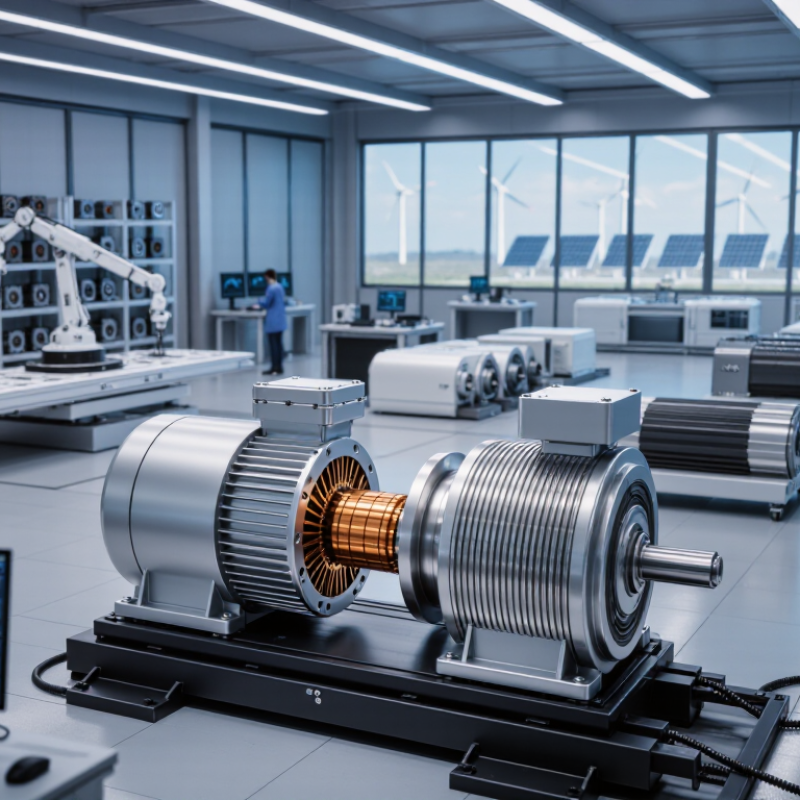
Top Torque Motor Manufacturers for Global Buyers

What Torque Motors Are and Why Global Buyers Use Them

A torque motor is a large-diameter, low-speed motor that produces high rotational force directly at the load. It usually removes the gearbox, coupling, and several wear points. This direct-drive design can improve positioning accuracy and reduce mechanical noise. In a rotary table, the motor can turn a heavy fixture smoothly, even during repeated starts and stops. The result feels simple, but selecting one is not.

Global buyers use torque motors in robotics, machine tools, semiconductor equipment, packaging lines, and renewable-energy systems. They value precise motion, compact integration, and lower maintenance demands. A direct-drive motor also avoids gear backlash, which matters when a cutting tool must return within a few microns.

However, the motor may require careful thermal management. Continuous torque creates heat, especially inside a sealed production machine. Cooling cannot be treated as an afterthought.

When comparing manufacturers, buyers should examine continuous torque, peak torque, torque ripple, speed range, encoder compatibility, and available documentation. Ask for test conditions, not only headline ratings. A motor rated for a brief peak may perform poorly in constant-duty service. Installation experience also matters. Cable routing, bearing loads, alignment, and control tuning can change real performance. This is where specifications alone become incomplete. A technically strong supplier should explain limits clearly, support regional compliance, and provide responsive engineering assistance. Mistakes happen. A careful review of duty cycles and ambient temperature can prevent an expensive redesign.

Key Specifications for Comparing Torque Motor Manufacturers

When comparing torque motor manufacturers, begin with continuous torque, not peak torque. Peak torque may last only seconds. Check rated speed, torque constant, phase current, and allowable overload time. These figures reveal whether a motor suits a rotary table, robotic joint, or precision indexing system. Request test conditions, including voltage, cooling method, ambient temperature, and winding temperature. Without these details, two impressive datasheets cannot be compared fairly.

Thermal performance often separates a reliable motor from an attractive specification. Examine continuous torque at the actual duty cycle. Ask for resistance values, temperature limits, and cooling requirements. A liquid-cooled motor may deliver greater torque, but it needs extra plumbing and maintenance. Encoder resolution also matters. A high-resolution sensor supports smoother positioning, although control quality depends on the drive and software. I have seen projects overvalue resolution and overlook cable routing, connector quality, and installation space.

Mechanical and service details deserve equal attention. Compare rotor inertia, axial load capacity, bearing life, runout, protection rating, and shaft tolerances. Request sample inspection reports and production test records. Manufacturers should explain calibration methods and acceptance limits. Documentation matters. So does response time. My own comparisons have not always been perfect; early estimates sometimes ignored heat buildup inside a sealed housing. A useful supplier should discuss such risks openly, provide realistic lead times, and support replacement parts across the buyer’s operating regions.

Top Torque Motor Manufacturers for Global Buyers

Key Specifications for Comparing Torque Motor Manufacturers

This chart presents representative engineering benchmarks by torque-motor size class. Continuous torque indicates the sustained output under rated thermal conditions, while peak torque represents short-duration overload capability. Buyers should also compare cooling method, duty cycle, encoder resolution, operating speed, efficiency, and environmental protection rating before selecting a supplier.

How Leading Manufacturers Design and Build Torque Motors

Top Torque Motor Manufacturers for Global Buyers

How Leading Manufacturers Design and Build Torque Motors

Leading torque motor manufacturers begin with the load, not a catalog number. They measure continuous torque, peak torque, speed, duty cycle, and shaft inertia. A rotary table may need high holding torque at low speed. A robotic joint may demand rapid reversals and quiet operation.

The U.S. Department of Energy reports that motor-driven systems consume more than half of industrial electricity. This makes efficiency a design decision, not a marketing detail. Engineers select electromagnetic steel, copper fill, magnets, bearings, and cooling methods together. Direct-drive torque motors remove gearbox losses, but they require accurate feedback and careful thermal control. Small errors matter.

Manufacturing quality appears in less visible steps. Stator windings need consistent placement and insulation thickness. Rotor magnets require secure bonding and balanced assembly. Each unit should undergo resistance, insulation, vibration, temperature-rise, and torque testing. IEC 60034 efficiency and performance guidance supports comparable evaluation across markets. Still, published efficiency numbers may use different test conditions. Buyers should ask for the test speed, cooling method, and measurement uncertainty.

IEA analysis places electric motor systems near half of global electricity consumption. Better control can therefore reduce operating costs and heat. Yet higher efficiency can increase material cost and design complexity. That trade-off deserves honest review. A prototype that performs well in a laboratory may behave differently beside dust, vibration, or fluctuating voltage. Reliable manufacturers document those limits and provide traceable test data, drawings, and service procedures.

Global Supplier Evaluation: Quality, Compliance, and Support

Selecting torque motor manufacturers for global projects requires more than comparing rated torque and price. Buyers should inspect winding quality, rotor balance, bearing selection, and thermal performance under continuous load. A reliable supplier can provide test data, dimensional drawings, material records, and traceable production documents. Ask how samples are tested, not only whether testing exists.

Compliance deserves equal attention. Confirm that the manufacturer supports applicable safety, electromagnetic compatibility, environmental, and export documentation requirements for your destination market. Certificates should match the exact motor series and production site. A generic certificate is weak evidence. Review revision dates, test conditions, and authorized laboratory details.

Tips: Request a sample inspection report before placing a large order. Check torque consistency across several units. Clarify insulation ratings, protection levels, noise limits, and expected service life. Also confirm packaging, spare parts, response times, and technical support in your time zone. Small details matter.

Support often separates a dependable supplier from a capable factory. Ask whether engineers can review load profiles, acceleration curves, duty cycles, and installation constraints. Clear troubleshooting procedures reduce downtime. However, supplier claims still require verification. During evaluation, record unanswered questions and revisit them. We sometimes overvalue polished presentations and overlook slow technical replies. That is a mistake worth correcting. A strong partnership develops through evidence, practical communication, and honest limits.

Selecting the Right Torque Motor Manufacturer for Your Application

Selecting the Right Torque Motor Manufacturer for Your Application

A torque motor is not chosen by peak torque alone. Continuous torque, speed range, thermal limits, duty cycle, and rotor inertia must match the machine. In a rotary table, for example, a motor may hold position for hours, then accelerate a heavy load within seconds. That changes the cooling and bearing requirements. The International Federation of Robotics reported 541,302 industrial robot installations in 2023. This growth shows why repeatable motion, compact integration, and dependable feedback systems matter to global buyers.

Ask manufacturers for measured torque curves, temperature data, encoder compatibility, and failure-rate information. Confirm whether tests reflect your real load profile. Housing protection, cable routing, sealing, and service support also deserve attention. A supplier with strong engineering documentation is usually safer than one offering only impressive catalog figures. Yet documentation can still hide gaps. I have seen selections fail because engineers ignored heat from nearby drives.

Tips: Compare continuous torque at your actual ambient temperature. Request sample test records. Check spare-part availability in your region. Clarify warranty limits and response times before purchase.

The right manufacturer should support simulation, prototype testing, and final validation. ISO-certified processes can improve consistency, but certification alone proves little about application fit. Review tolerance control, balancing methods, inspection records, and customization experience. MarketsandMarkets identifies automation and robotics as major drivers of the direct-drive motor market, but market growth does not guarantee every supplier is suitable. A careful trial remains valuable, even when the specification seems obvious.

Top Torque Motor Manufacturers for Global Buyers - Selecting the Right Torque Motor Manufacturer for Your Application

Selection Dimension Typical Requirement Recommended Motor Capability Why It Matters What to Verify with the Manufacturer
Continuous Torque Steady operating torque for the complete duty cycle Select a rating at least 20% above the calculated continuous load Prevents thermal overload during continuous operation Torque-speed curves, winding temperature limits, and cooling conditions
Peak Torque Acceleration, indexing, forming, or short-term overloads Peak torque commonly ranges from 2 to 3 times continuous torque for short durations Determines acceleration performance and transient load capacity Permitted peak duration, duty-cycle limits, current requirements, and demagnetization margin
Operating Speed Low-speed positioning or high-speed rotary operation Typical direct-drive torque motors operate from near zero speed to approximately 1,000–3,000 rpm, depending on size and design Speed affects back EMF, power demand, bearing design, and rotor balance Maximum mechanical speed, electrical frequency, rotor inertia, and overspeed test data
Torque Density Compact machine design with limited installation space Compare continuous torque per active volume or per kilogram rather than peak torque alone Higher torque density can reduce machine size and moving mass Active length, outer diameter, total mass, thermal resistance, and rated torque at the specified temperature
Cooling Method Natural convection, forced air, or liquid-cooled equipment Use liquid cooling for high continuous torque, high duty cycles, or restricted enclosure space Cooling directly affects continuous torque and winding life Coolant flow rate, inlet temperature, pressure drop, sealing method, and thermal test conditions
Positioning Accuracy Precision indexing, semiconductor equipment, robotics, or inspection systems Use a low-cogging motor with a suitable high-resolution encoder or resolver Motor cogging, torque ripple, encoder resolution, and control tuning affect motion quality Cogging torque, torque ripple, encoder compatibility, runout, repeatability, and servo-drive integration
Mechanical Integration Frameless integration, housed motor, or complete rotary actuator Choose frameless kits for custom machine integration and housed units for faster installation The mechanical format determines bearing, shaft, enclosure, and assembly responsibilities Mounting dimensions, allowable radial and axial loads, air gap requirements, shaft tolerances, and bearing options
Environmental Protection Clean factory, dusty production area, washdown zone, or outdoor installation Specify the required IP rating, corrosion protection, insulation system, and operating temperature range Moisture, dust, chemicals, and temperature can reduce reliability and insulation life IP test standard, ambient temperature range, humidity limits, cable protection, and surface treatment
Electrical Compatibility Integration with an existing servo drive or motion-control platform Match rated voltage, phase current, back EMF, pole count, and feedback interface to the drive Incorrect electrical matching can cause overheating, unstable control, or insufficient speed Electrical data sheets, winding resistance, inductance, back EMF constant, insulation class, and drive recommendations
Quality and Compliance Industrial production, regulated equipment, or export-oriented projects Prefer documented quality controls, traceable testing, and applicable regional conformity documentation Consistent manufacturing and documentation reduce field failures and approval delays Factory quality certification, inspection records, test reports, material traceability, warranty terms, and change-control procedures
Customization and Support Non-standard dimensions, special feedback, custom windings, or high-volume production Select a manufacturer able to provide engineering validation, prototypes, and documented production support Application-specific support can improve performance and shorten integration time Prototype lead time, minimum order quantity, engineering resources, spare-parts policy, and global service coverage

Note: Torque, speed, thermal, and protection values are typical engineering reference ranges rather than guaranteed ratings. Final selection should be based on the manufacturer’s tested performance data under the actual load, speed, cooling, and environmental conditions.

FAQS

What is a torque motor?

It is a large-diameter, low-speed motor that produces strong rotation directly at the load.

Why do global buyers use torque motors?

They support robotics, machine tools, packaging equipment, and renewable-energy systems.

What should buyers compare before choosing a motor?

Compare continuous torque, peak torque, speed range, torque ripple, and rotor inertia.

Why is continuous torque important?

Continuous torque shows how the motor performs during extended operation.

How does temperature affect motor selection?

Continuous operation creates heat, especially inside sealed production equipment.

What installation details can change performance?

Cable routing, bearing loads, alignment, and control tuning can affect real results.

What documents should a manufacturer provide?

Request measured torque curves, test conditions, temperature records, and encoder information.

Does certification guarantee a suitable motor?

No. Certified processes may improve consistency, but they do not prove application fit.

What practical checks should buyers complete before purchase?

Check regional spare parts, warranty limits, service coverage, and response times.

Conclusion

A Torque Motor is a direct-drive motion solution designed to produce high rotational force at low speeds without requiring traditional gearboxes. This structure can improve positioning accuracy, reduce mechanical wear, simplify system design, and support demanding applications such as robotics, machine tools, semiconductor equipment, packaging systems, and precision automation. When comparing manufacturers, global buyers should examine torque range, continuous and peak performance, speed, accuracy, thermal management, size, efficiency, feedback compatibility, and expected service life.

Leading manufacturers typically combine electromagnetic design, robust materials, precision machining, advanced winding methods, and rigorous testing to ensure consistent performance. Buyers should also evaluate manufacturing quality systems, product certifications, documentation, delivery capability, technical support, customization options, and after-sales service. The right supplier should understand the application’s load profile, duty cycle, environmental conditions, installation requirements, and control architecture. By balancing technical specifications, compliance, reliability, total cost, and long-term support, customers can select a Torque Motor manufacturer that offers dependable performance and a practical fit for their global operations.

Ethan

Ethan

Ethan is a seasoned marketing professional with a deep expertise in our company's innovative product line. With a passion for sharing knowledge and insights, he takes the lead in regularly updating our corporate blog, where he explores industry trends, product features, and effective marketing......