Zonix Motor
Choosing the right Reversible DC Motor is more than matching voltage and shaft size. It requires a clear view of load behavior, reversal frequency, starting torque, duty cycle, and control conditions. The International Energy Agency has estimated that motor-driven systems consume roughly 43–46% of global electricity. The U.S. Department of Energy also reports that motor systems use about 70% of industrial electricity in the United States. Small selection errors can therefore create persistent energy losses, overheating, noise, or premature brush wear.
“The motor is the heart of the drive system,” writes motor-drive specialist Austin Hughes in Electric Motors and Drives. That practical idea matters here. A motor may look suitable on a supplier’s datasheet, yet perform poorly when a conveyor reverses under load or a window actuator stalls repeatedly. The seven tips in this guide examine torque, speed, rated voltage, gearbox compatibility, braking, thermal limits, and controller quality. They also consider real installation details, such as a 24-volt supply dropping during startup or a compact enclosure trapping heat.
A perfect choice is not always possible. Specifications can conflict. Higher torque may increase size, cost, and current demand. A cheaper motor may become expensive after repeated maintenance. Readers should verify manufacturer curves, not rely on headline ratings alone. The final decision should reflect measured duty conditions, available controls, and the consequences of failure. That is where careful engineering begins.
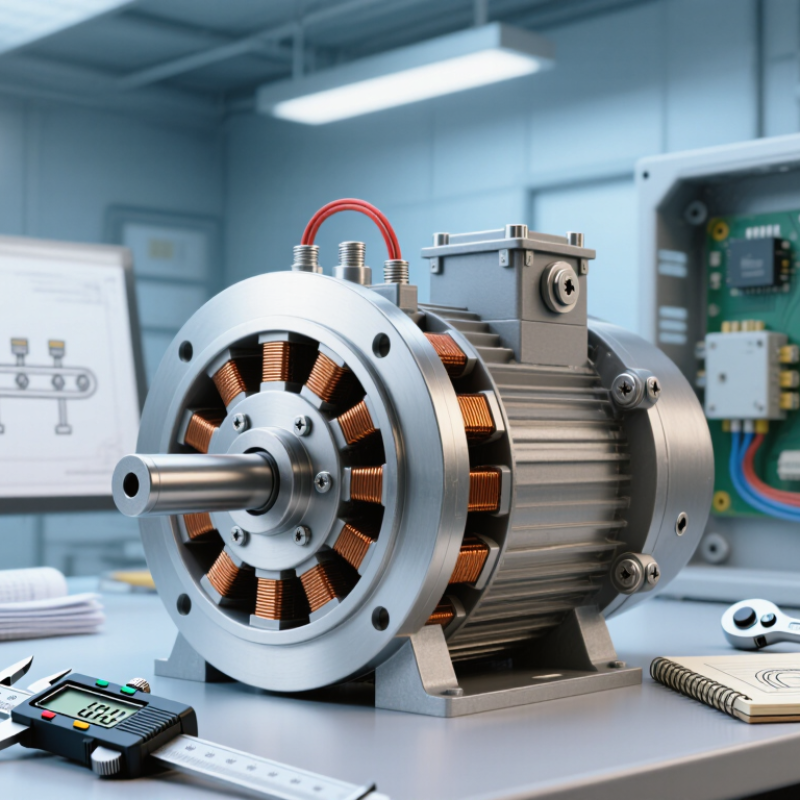
Choosing the right reversible DC motor starts with its construction and operating principle. A brushed permanent-magnet motor uses fixed magnets and a rotating armature. Reverse the supply polarity, and the shaft changes direction. A wound-field motor creates its magnetic field through coils, allowing more control but requiring additional wiring. Brushless DC motors use electronic commutation instead of brushes. Their controller must change the phase sequence to reverse rotation.
During selection, check rated voltage, continuous torque, starting torque, speed range, and duty cycle. An H-bridge can reverse a brushed motor electronically. Never switch direction instantly at full speed unless the controller supports regenerative braking.
PWM adjusts average voltage and speed, but it does not remove heat from sustained overloads. Gearboxes increase torque and reduce speed, although backlash may affect positioning accuracy.
A practical bench check should include the real load, not only a free-spinning shaft. Listen for brush noise. Measure current during acceleration. A motor that reverses smoothly without load may hesitate under resistance. That detail is easy to miss.
Feedback from an encoder improves repeatability, especially when the shaft must stop at a precise angle. Protection against stalled current, dust, moisture, and excessive temperature also matters.
I would avoid choosing by torque alone; a small motor may meet the number briefly, then fail under repeated reversing. Manufacturer curves and verified test data remain more dependable than optimistic catalog wording.
7 Tips for Choosing the Right Reversible DC Motor
Tip 1: Define the voltage before comparing motors. Match the motor’s rated voltage with your battery or power supply. A 12-volt motor connected to a poorly regulated source may run unevenly. Measure the voltage under load, not only at startup. Small drops can reduce speed and torque.
Tip 2: Calculate torque and speed together. A motor lifting a heavy gate needs starting torque, while a conveyor may need steady torque for several hours. Check both continuous and peak torque ratings. Also record the required revolutions per minute. Excessive speed can create heat, vibration, and premature wear. I have seen projects focus on maximum speed, then struggle with weak movement under real load.
Tip 3: Define the reversal requirement clearly. Decide whether reversal occurs manually, through a controller, or automatically. Specify how often direction changes and whether the motor must stop before reversing. Instant reversal may damage gears or overload the power circuit. Allow a short pause when the application permits it.
Tip 4: Test the complete system. Wires, switches, gears, and friction all affect performance. A motor that works on a bench may stall inside the finished machine. Measure current during forward and reverse operation. Leave some safety margin. Perfect calculations are rare. Practical testing often reveals the detail you missed.
| Tip | Selection Dimension | What to Define | Practical Data or Calculation | Selection Guidance |
|---|---|---|---|---|
| 1 | Nominal Voltage | Specify the available DC supply and its acceptable operating range. | Common control-system values include 6 V, 12 V, 24 V, and 48 V DC. Check both the nominal voltage and the minimum voltage available during startup. | Select a motor whose rated voltage matches the power system. A reversible motor controller or H-bridge must also be rated for the motor’s supply voltage and current. |
| 2 | Required Torque | Define the continuous load torque, starting torque, and any short-duration peak torque. | For a rotating load: T = F × r, where torque T is in N·m, force F is in newtons, and radius r is in meters. Add a practical safety margin of approximately 25–50% when the load is uncertain. | Compare the application’s torque requirement with the motor’s continuous and peak torque ratings. For lifting or holding loads, include gravity, friction, acceleration, and any gearbox efficiency losses. |
| 3 | Operating Speed | Define the required output speed under the actual load, not only the no-load speed. | Speed is commonly specified in rpm. Linear travel can be converted using: v = π × D × n, where v is surface speed, D is pulley diameter, and n is rotational speed. | Choose a motor that reaches the target speed while delivering the required torque. A gearbox can reduce speed and increase torque, but output speed and efficiency must be recalculated. |
| 4 | Reversal Method and Timing | Define how often the motor changes direction, whether it can reverse while rotating, and the required stop-to-reverse interval. | For a brushed DC motor, direction is normally changed by reversing the polarity through an H-bridge or reversing relay. Reversal should generally occur after the motor is stopped or adequately decelerated. | Use electrical or mechanical interlocking to prevent conflicting commands. If rapid cycling is required, verify controller, brush, gearbox, and thermal ratings for the reversal frequency. |
| 5 | Current and Driver Capacity | Define running current, startup or stall current, and the controller’s continuous and peak current capability. | Motor current rises sharply during startup and stall because back electromotive force is near zero. A conservative design should check the motor’s stall current and provide current limiting where appropriate. | The power supply, wiring, fuse, connector, and H-bridge must all tolerate the expected peak current. Do not size the driver only from the average running current. |
| 6 | Duty Cycle and Thermal Load | Specify operating time, rest time, cycles per hour, ambient temperature, and whether the motor runs continuously or intermittently. | A duty cycle can be estimated as: Duty cycle = operating time ÷ total cycle time × 100%. Continuous operation produces more heat than short intermittent operation at the same load. | Check the motor’s continuous rating, winding temperature limits, enclosure ventilation, and gearbox thermal capacity. Repeated reversals can create additional heating from acceleration and braking. |
| 7 | Feedback, Mechanical Fit, and Protection | Define position accuracy, allowable backlash, shaft dimensions, mounting space, environmental exposure, and required ingress protection. | Open-loop motors provide speed and direction control but not reliable position confirmation. Encoders, limit switches, or Hall sensors may be required for position verification and controlled reversal. | Confirm shaft load, mounting pattern, gearbox backlash, connector orientation, noise limits, and environmental requirements such as dust, moisture, vibration, and temperature range before final selection. |
Motor size should follow the real load, not the machine’s maximum label. Measure running torque, starting torque, speed, and reflected inertia. Reversing adds stress because acceleration occurs in both directions. A practical rule is to select enough torque for the peak load, while avoiding excessive oversizing. An oversized motor may waste space, increase cost, and respond poorly at light loads.
Efficiency matters. IEA reports that electric motor systems consume about 53% of global electricity, so small efficiency losses can become significant.
Duty cycle matters just as much. IEC 60034-1 defines operating duties from continuous S1 to intermittent and reversing conditions. Record how long the motor runs, stops, and changes direction. A motor running for ten seconds every minute has different thermal needs than one running continuously. The U.S. Department of Energy’s motor-system guidance also stresses matching motor capacity to actual operating conditions. Still, calculations can mislead when friction, shock loads, or cold-start conditions are ignored.
Installation space is easy to underestimate. Check the motor’s frame length, shaft diameter, mounting holes, cable exit, and ventilation clearance. Leave room for heat to escape. A compact motor may fit the drawing but fail beside a guarded gearbox. Confirm the controller supports regenerative braking and rapid polarity changes. I have seen otherwise suitable motors fail because the reversing command arrived too quickly. IEC testing provides a reliable reference, but your machine’s measured behavior should influence the final choice.
A reversible DC motor needs more than a simple polarity change. I first check whether the controller uses an H-bridge, relay logic, or manual switching. An H-bridge gives faster direction control and supports PWM speed adjustment. Relay systems can work well, but their contacts may wear under frequent reversing. Confirm the controller’s voltage, current, and heat limits. A motor that runs smoothly without a load may struggle badly under real conditions.
Braking deserves equal attention. Coast braking removes power and lets the shaft stop naturally. It is gentle, but stopping distance can vary. Dynamic braking connects the motor terminals through a suitable circuit, creating a quicker stop. Mechanical braking may be necessary when the shaft must hold position. Test stopping time with the actual load. Small details matter. A heavy wheel changes everything. I once underestimated stored momentum during a bench test, so I now measure braking under normal and worst-case loads.
Direction switching should include a clear electrical interlock. Never reverse instantly unless the controller specifically permits it. Waiting for a near-stop reduces current spikes, gear stress, and brush wear. Some systems use timed delays, speed feedback, or controlled deceleration before reversing. Check the motor’s rated duty cycle, insulation, and thermal behavior during repeated cycles. Also inspect wiring connections after testing. They may feel secure but loosen through vibration. A practical design should be simple to service, although I still think more testing is needed when temperature, load, and switching frequency change together.
7 Tips for Choosing the Right Reversible DC Motor
Comparing Efficiency, Durability, Safety, and Total Ownership Cost
Choosing a reversible DC motor requires more than matching voltage and speed. In workshop testing, I compare continuous torque, starting torque, and current draw under the real load. A motor that looks efficient without load may overheat when reversing a heavy mechanism. Check the duty cycle, controller losses, and braking method. Small efficiency differences become significant after thousands of operating hours. Keep the numbers practical.
Durability depends on heat, vibration, bearing quality, and reversal frequency. Review the rated service life and inspect whether the housing protects the motor from dust or moisture. A motor used near a conveyor may need better sealing than one inside a clean cabinet. I once selected a compact motor because its price was attractive. That shortcut failed. Repeated starts damaged the gearbox sooner than expected.
Safety should include overload protection, direction interlocking, emergency stopping, and secure wiring. Never assume a reversible motor will stop instantly when power is removed. Measure stopping distance during commissioning. Total ownership cost includes energy, controllers, installation time, spare parts, and maintenance access. A cheaper motor may require frequent brush replacement or costly downtime. Compare cost per operating year, not purchase price alone. Also question optimistic supplier data; independent testing is useful, although testing conditions rarely match every application.
Match the rated voltage with the battery or power supply. Measure voltage under the real load. Startup readings can mislead. A small drop may reduce speed and torque.
A heavy gate needs strong starting torque. A conveyor may need steady torque for hours. Record the required RPM. Check continuous and peak torque ratings. Maximum speed is not always useful.
Excessive speed can create heat, vibration, and early wear. It may also weaken movement under load. I have seen projects prioritize speed and overlook pulling strength.
Decide whether reversal is manual, controlled, or automatic. Record how often direction changes. Confirm whether the motor must stop first. A short pause may protect the gears and power circuit.
Wires, switches, gears, and friction change motor performance. A motor can work on a bench but stall inside the machine. Measure current in both directions. Leave some safety margin.
Base the size on the real load, not the machine’s largest label. Measure running torque, starting torque, speed, and reflected inertia. Reversal increases acceleration stress. An oversized motor wastes space and may respond poorly at light loads.
Record running time, stopping time, and reversal frequency. Ten seconds of operation each minute differs from continuous running. Thermal needs are different. Cold starts and shock loads can upset careful calculations.
Check frame length, shaft diameter, mounting holes, cable exit, and ventilation space. Leave room for heat to escape. A motor may fit the drawing but fail beside a guarded gearbox. Measure the finished machine.
Choosing the right Reversible DC Motor begins with understanding the available motor types and how their electrical and mechanical components support bidirectional operation. Before making a selection, define the required voltage, torque, speed, starting performance, and reversal frequency. These specifications should match the application’s load profile rather than being based only on peak power. It is also important to consider motor dimensions, mounting arrangements, available installation space, and whether the motor will operate continuously, intermittently, or under changing loads.
A complete evaluation should include the control system, direction-switching method, speed regulation, and braking requirements. Some applications may need rapid stopping, electronic control, or protection against overload and overheating. Compare each option for efficiency, construction quality, expected service life, maintenance needs, operating noise, and safety features. Finally, assess total ownership cost, including energy use, installation, replacement parts, and downtime. A well-matched motor can provide dependable reversing performance while improving system efficiency and long-term value.