Zonix Motor Zonix Motor

How to Choose the Right Custom Gear Motor?

Time:2026-11-14 Author:Henry
0%

Choosing a Custom Gear Motor begins with the machine, not the catalog. A conveyor moving heavy cartons needs different output torque from a compact actuator positioning a camera. Start with required speed, load, duty cycle, and available space. Then check the operating environment: heat, dust, moisture, vibration, and frequent starts can change the right choice. Small details matter. A shaft that is two millimeters too long can disrupt an otherwise sound design.

There is no verified expert quotation or source in the supplied material, so attributing a statement to a named specialist would risk inventing authority. A useful design principle is: “Match the gear motor to the real load, not just the ideal calculation.” Treat that as an editorial line, not a sourced expert quote. A qualified application engineer can validate torque and speed calculations, gear ratio, motor type, mounting, and thermal limits. Ask for evidence, too: test data, rated-duty information, and clear operating limits. One caution: calculated requirements may not capture every startup shock or production change. That deserves a second look. Choosing well is a process of checking assumptions against actual use, then confirming the motor can perform reliably over time.
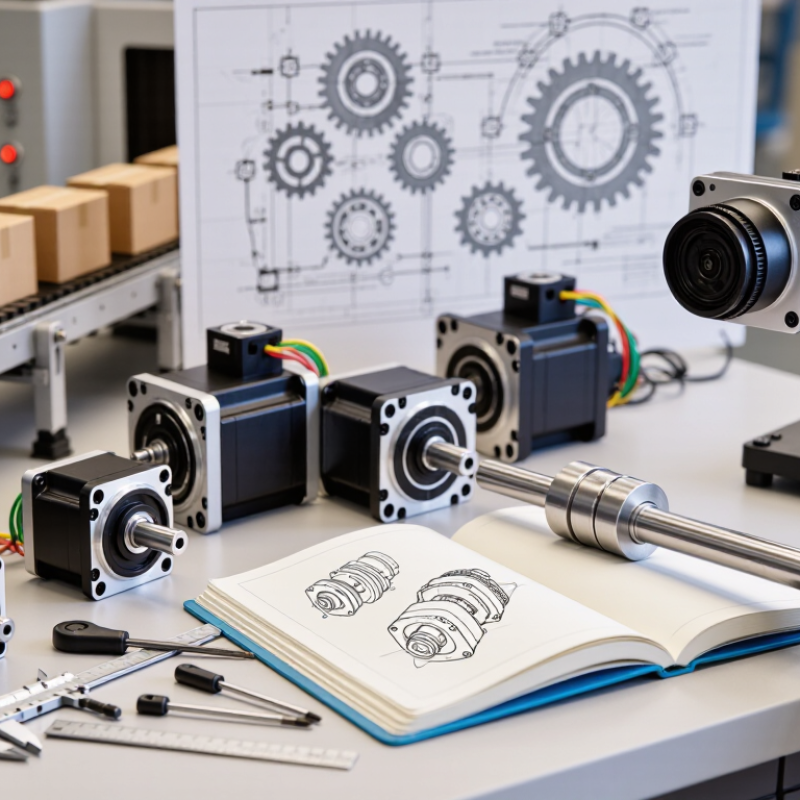
How to Choose the Right Custom Gear Motor?

Map Load and Duty Cycle Using IEC 60034-1 S1–S10 Duty Classes

Choosing a custom gear motor starts with the machine’s actual operating pattern, not just its peak torque. IEC 60034-1 duty classes S1–S10 describe how long a motor runs, rests, starts, brakes, and changes speed. Record load, speed, starts per hour, pauses, and ambient conditions over a representative shift. Field notes are rarely perfect. Mark estimates clearly.

S1 describes continuous operation at steady load until thermal equilibrium. S2 covers a defined short run followed by enough rest for the motor to cool. S3 involves repeated load and rest periods, where starting effects usually have little influence on heating. If starts add significant heat, assess S4; if electric braking does too, S5 may apply. S6 alternates between load and no-load without resting. S7 includes starting and braking, also without rest. That distinction matters.

For changing loads or speeds, consider S8, which describes periodic combinations, or S9, for non-periodic variations and possible overloads. S10 covers operation at discrete, sustained load levels. Match the class to measured conditions, then verify output torque and thermal limits with a qualified engineer. A conveyor may seem like S1 but cycle during upstream pauses. Don’t force a neat category. Record unusual peaks and review uncertain assumptions before specifying the gear motor.

Calculate Required Torque and Gear Ratio Using P = Tω

For a custom gear motor, start with the load’s required output power and speed. The relationship is:

P = Tω

where P is power in watts, T is torque in newton-metres, and ω is angular speed in radians per second.

With speed in rpm, use T = 9550 × P(kW) ÷ n(rpm). Keep units consistent. Small conversion errors can distort the result.

For example, a conveyor needing 0.75 kW at 60 rpm requires about 119 Nm of output torque. A 1,450 rpm motor would need a gear ratio near 24:1.

At 85% gearbox efficiency, input power must be about 0.88 kW, before allowances for startup or shock loads.

The U.S. Department of Energy’s 2014 motor-system sourcebook reports that motor-driven systems use about 68% of industrial electricity in the United States. That figure is a reminder: efficiency matters, not just peak torque. A calculation is only a starting point; actual friction and load changes deserve a check.

Tips: Confirm the heaviest startup load, operating hours, and duty cycle. Ask for the gearbox’s rated efficiency at your actual speed. I would recheck the numbers against measured load data; estimates can look neat and still miss.

Rate Spur and Helical Gears Against ISO 6336 or ANSI/AGMA 2001

How to Choose the Right Custom Gear Motor?

Rate Spur and Helical Gears Against ISO 6336 or ANSI/AGMA 2001

A custom gear motor should be rated for its actual load, speed, duty cycle, and operating environment. Spur gears are often simpler, while helical gears engage more gradually and generate axial thrust. Neither is automatically stronger. Compare both designs using one consistent method: ISO 6336 or ANSI/AGMA 2001. These procedures assess tooth-root bending and surface durability, including pitting risk. Use the same input torque, service life, and reliability assumptions for each candidate.

ISO 6336-2:2019 addresses surface durability, and ISO 6336-3:2019 covers tooth bending strength. ISO 6336-5:2016 provides material strength numbers by material quality and heat treatment; values should match the actual gear specification. ANSI/AGMA 2001-D04 also sets out rating factors and calculation methods for involute spur and helical teeth.

Check application and dynamic factors, face width, lubricant, and manufacturing quality. Then compare calculated stresses with allowable values from the selected method. Small details matter. A narrow face can raise stress; poor lubrication can undermine an otherwise sound rating. A spreadsheet can still flatter a weak design. Confirm assumptions against measured motor loads and, where possible, prototype inspection.

Check Thermal Limits and Efficiency at the Specified Operating Point

A custom gear motor should be checked at the speed and torque it will actually deliver, not only at its rated maximum. Efficiency changes with load, speed, voltage, and gearbox ratio. A motor that looks efficient on a catalog curve may run less efficiently during frequent starts or at low speed. Measure or request performance data for the specified operating point, including current and output torque.

Heat is the practical test. Losses in the motor windings and gears become heat, and a small housing may not shed it quickly. Check the allowable winding temperature, ambient temperature, duty cycle, and mounting conditions. A motor tested on an open bench may run hotter inside a sealed machine. Heat adds up. Leave margin for nearby equipment warming the enclosure, too. If the application cycles between heavy and light loads, estimate the thermal effect across the full cycle rather than judging one brief peak. Efficiency alone is not enough. It can be tempting to trust a single test result, but real airflow, lubricant condition, and installation details are easy to overlook. Recheck temperatures after the assembly reaches steady operation.

Compare Motor Efficiency Using IEC 60034-30-1 IE1–IE4 Classes

How to Choose the Right Custom Gear Motor?

Compare Motor Efficiency Using IEC 60034-30-1 IE1–IE4 Classes

When comparing custom gear motors, check the motor’s IE class under IEC 60034-30-1. IE1 is Standard Efficiency; IE2, High; IE3, Premium; and IE4, Super Premium. These classes set minimum efficiency levels, not guaranteed operating results. The required threshold varies with motor output, number of poles, and supply frequency, so compare equivalent specifications.

The U.S. Department of Energy’s 2014 motor systems sourcebook reports that motor-driven systems use about 68% of electricity in U.S. manufacturing. Even modest efficiency gains can matter on equipment running long shifts. Duty cycle matters. A conveyor running 20 hours daily may benefit from a higher-efficiency motor, but only if its load and operating profile support the choice.

For a fair comparison, review rated power, speed, load, and measured motor efficiency together. Then account for gearbox losses separately: an IE4 motor does not make the entire geared unit IE4. I would also check efficiency at the machine’s usual operating point, not only at full load. That detail is easy to miss. Ask for test conditions and efficiency data, and verify that the cited IEC edition matches the motor’s scope. A class label helps narrow options; it cannot replace application-specific checks.

How to Choose the Right Custom Gear Motor? - Compare Motor Efficiency Using IEC 60034-30-1 IE1–IE4 Classes

Efficiency class Class name Example minimum motor efficiency What the class indicates Gear motor selection guidance
IE1 Standard Efficiency 87.7% Baseline efficiency level in the IE1–IE4 comparison. Consider only where the applicable requirements allow it and purchase cost is a primary factor. Compare lifetime energy use before selecting.
IE2 High Efficiency 89.6% Higher minimum efficiency than IE1 for the example motor rating. Check local efficiency regulations and confirm that the motor meets the required class for its intended application.
IE3 Premium Efficiency 91.7% Higher minimum efficiency than IE2 for the example motor rating. Often a useful option for equipment with long operating hours. Compare total cost of ownership, including energy, controls, and maintenance.
IE4 Super Premium Efficiency 93.6% Highest efficiency class shown in this comparison. Evaluate for continuous-duty or high-energy-use applications. Confirm availability, starting and speed-control requirements, and full gearmotor performance.

Example efficiencies are IEC 60034-30-1 minimum values for a 7.5 kW, four-pole, 50 Hz motor; they are not universal class thresholds. Applicable values depend on motor rated output, pole count, frequency, and the standard edition. IEC 60034-30-1 classifies motor efficiency, not the combined efficiency of the motor and gearbox. For a gear motor, compare the complete unit at the required speed, torque, load, and duty cycle, and verify applicable local regulations.

FAQS

Are helical gears always stronger than spur gears?

No. Spur gears are simpler, while helical gears engage more gradually and create axial thrust. Neither design is automatically stronger.

How should I compare spur and helical gear ratings?

Use one rating method for both designs, such as ISO 6336 or ANSI/AGMA 2001. Keep torque, service life, and reliability assumptions consistent.

Which gear stresses should a rating check include?

Check tooth-root bending and surface durability, including pitting risk. A narrow gear face can increase stress.

What details affect a gear’s allowable strength?

Match material values to the actual material quality and heat treatment. Also check lubrication and manufacturing quality. Small details matter.

Can a spreadsheet confirm that a gear design is safe?

Not by itself. Compare assumptions with measured motor loads, and inspect a prototype where possible. I may be trusting neat calculations too much.

What do IE1 through IE4 motor classes indicate?

They identify minimum motor-efficiency levels, from Standard Efficiency at IE1 to Super Premium at IE4. They do not guarantee real operating results.

How can I compare motor efficiency fairly?

Compare equivalent power, speed, load, and supply conditions. Check efficiency at the machine’s usual operating point, not only at full load.

Does an IE4 motor make the entire gear motor IE4?

No. Gearbox losses must be counted separately. A class label alone cannot describe the complete unit’s efficiency.

When might a higher-efficiency motor matter most?

It may help equipment running long shifts, such as a conveyor operating 20 hours daily. The actual load profile still matters.

Conclusion

Choosing the right Custom Gear Motor starts with understanding how it will operate. Map the load profile, starting frequency, and periods of rest to the appropriate IEC 60034-1 duty class, from S1 continuous duty to intermittent or cyclic classes such as S3–S10. Then calculate the torque and gear ratio needed at the output using P = Tω, accounting for the required speed and the demands of the driven equipment.

Next, evaluate the selected spur or helical gears for bending strength and contact durability using applicable ISO 6336 or ANSI/AGMA 2001 methods. Check that the motor and gearbox can dissipate heat at the specified operating point, and include efficiency when estimating input power and energy use. Finally, compare motor efficiency against the IEC 60034-30-1 IE1–IE4 classes. Considering load, gearing, thermal performance, and efficiency together helps identify a motor assembly suited to its application and expected operating conditions.

Henry

Henry

Henry is a dedicated marketing professional with a profound expertise in the company's offerings. With years of experience in the industry, he possesses an impressive understanding of the market dynamics and consumer behaviors that drive success. Henry is committed to sharing his insights through......