 Zonix Motor
Zonix Motor
Zonix Motor
Choosing a Precision Gear Motor supplier is not a simple price comparison. It is a reliability decision.
Global demand is expanding across robotics, medical equipment, packaging, automation, and aerospace systems. Grand View Research identifies automation and industrial machinery as major growth drivers in the gear motors market. MarketsandMarkets also reports rising demand for compact, efficient, and digitally controlled motion systems. These findings matter for buyers managing production lines, service networks, and long-term maintenance budgets.
Dr. Manfred Wittenstein, a respected precision-drive industry leader, has often emphasized that “precision is a question of attitude.” This principle reaches beyond micron-level accuracy. It includes backlash control, thermal stability, material consistency, testing discipline, and responsive technical support. A motor can look excellent on paper. The factory floor may disagree.
This guide reviews seven Precision Gear Motor suppliers serving global buyers. The comparison considers product accuracy, torque ranges, customization, certifications, delivery capability, and after-sales support. It also considers less visible details. Can the supplier provide repeatable test data? Are replacement parts available near your market? Does the engineering team understand your load profile?
Reports from Mordor Intelligence and Fortune Business Insights indicate continued investment in automated equipment. Yet market forecasts are not purchase guarantees. Supplier claims still require verification.
That is the difficult part.
A lower quotation may hide higher integration costs. A famous brand may not fit every application. Buyers should challenge assumptions, request samples, and test performance under real operating conditions. The best supplier is rarely the loudest one. It is the partner that performs consistently when temperature, vibration, and deadlines become real.
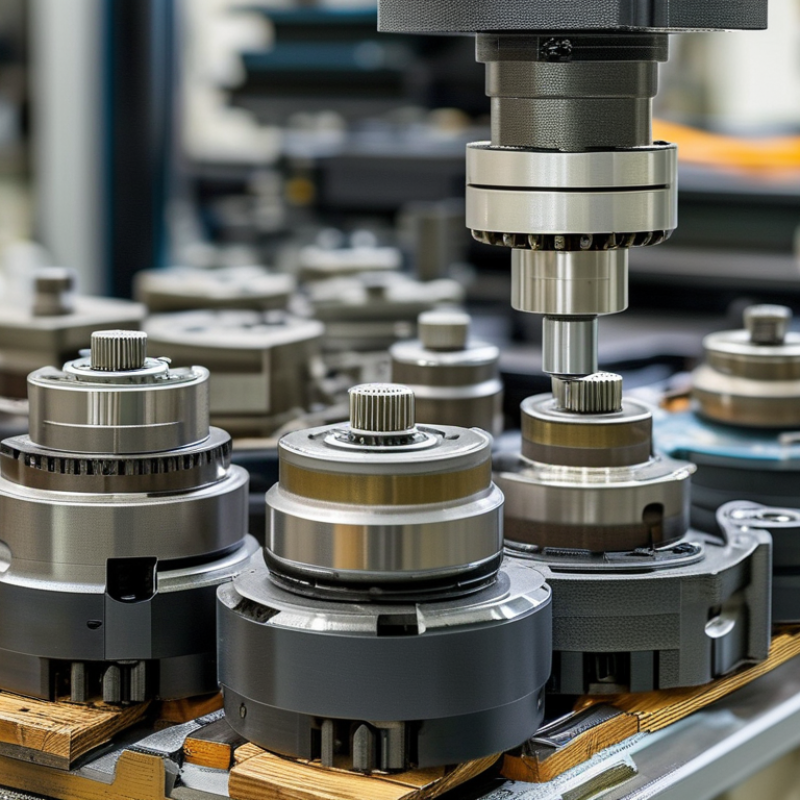
A high-quality precision gear motor supplier proves performance before discussing price. Their engineers should explain torque, speed, backlash, efficiency, and duty cycle in practical terms. They should also match the motor to your load profile, not simply recommend a standard model. Ask for test data, dimensional drawings, and clear tolerance ranges. Numbers matter.
Reliable suppliers maintain traceability from incoming materials to final inspection. Look for documented gear measurements, winding checks, noise testing, and thermal endurance tests. A serious factory can explain how it controls lubrication, shaft alignment, and vibration. It should provide samples that reflect production quality, not specially prepared units. Ask for evidence.
Support after delivery also defines quality. Global buyers need stable communication, replacement-part planning, and useful troubleshooting documents. An experienced supplier can discuss installation errors, overload risks, and realistic service life. Certifications may help, but certificates alone cannot prove precision. Small details matter.
No supplier gets every detail right. Even strong teams may miss a packaging weakness or underestimate a changing load. What matters is their response: honest investigation, corrective action, and measurable follow-up. Before committing to volume, test motors in your actual operating conditions. Record temperature, noise, positioning accuracy, and current draw over time. That process often reveals more than a polished sales presentation.
Compare torque accuracy, backlash, noise, thermal limits, service life, delivery stability, and technical support. Catalogue price is only one piece. Small gaps matter.
Request load curves, life-test conditions, lubrication details, inspection tolerances, and measured efficiency data. Check whether the records match the proposed motor. Polished claims are not enough.
A sample may perform well at light load but fail during repeated starts or continuous duty. Test the motor at your actual speed, torque, temperature, and cycle. Test it first.
Review gearbox efficiency, motor losses, standby power, and control compatibility. Ask for measurements at your operating speed, not only the highest published efficiency. Small losses become expensive across thousands of hours.
Check moisture protection, export packaging, spare-part availability, customs support, tracking, and documented shipping times. Most global trade moves by sea, so delays can affect production schedules. Plan imperfectly, but plan.
Review quality certification, calibration records, corrective-action reports, and change-control procedures. Confirm that certificates match the exact motor configuration. A similar model is not enough.
Confirm gear ratios, shaft dimensions, mounting holes, winding voltage, encoders, brakes, connectors, and cable lengths. Request drawings and tolerance data before ordering samples. Tiny connector errors can stop installation.
Treat certificates as evidence of process control, not proof of stable performance. Check torque, vibration, temperature behavior, and repeated starts. I may still miss hidden bottlenecks.
Start with a pilot order and written service terms. Confirm warranty coverage, replacement lead time, batch traceability, and technical response speed. Scaling too early remains a common mistake.
Choosing the right Precision Gear Motor supplier is essential for achieving reliable performance, efficient operation, and long-term value in global applications. A high-quality supplier should offer consistent manufacturing standards, precise engineering, dependable quality control, responsive technical support, and a clear understanding of international purchasing requirements. Buyers should evaluate product range, customization capabilities, production capacity, delivery reliability, documentation, warranty terms, and relevant certifications before making a decision.
This comparison of seven leading supplier types highlights differences in torque, speed control, materials, gearing options, motor compatibility, customization, testing, and certification support. Some suppliers may focus on compact designs, while others provide highly customized solutions for demanding industrial environments. The best choice depends on the application’s load, operating speed, installation space, duty cycle, environmental conditions, budget, and compliance needs. By comparing technical specifications, service capabilities, and total ownership costs, global buyers can select a supplier that delivers both dependable products and effective long-term support.
