Zonix Motor
Choosing the best Electric Actuator in 2026 means matching motion, load, accuracy, and operating conditions—not simply choosing the newest design. Linear actuators move a stem or slide; rotary models turn a shaft; quarter-turn and multi-turn units suit different valve movements. Servo and stepper-driven designs offer precise positioning, but their controls and setup can add complexity. There is no universal winner. Not even close.
Market growth makes careful selection more important. MarketsandMarkets estimated the electric actuator market at USD 15.1 billion in 2023 and projected USD 20.3 billion by 2028, a 6.1% compound annual growth rate. These are forecasts, not guarantees; market definitions and estimates vary. For buyers, the practical details matter more: cycle frequency, available power, duty rating, feedback needs, and access for maintenance. A unit that fits neatly on a specification sheet may still struggle in a hot, dusty plant or under repeated starts.
Process-control author and ISA Fellow Greg McMillan’s guidance can be paraphrased this way: assess actuator behavior as part of the control loop, not as an isolated motor choice. That distinction helps explain why response time, positioning accuracy, and integration deserve equal attention. The comparison ahead weighs common actuator types against those real operating demands. Some trade-offs remain messy. That is worth admitting. The best choice depends on the job, the installation, and what failure would cost.
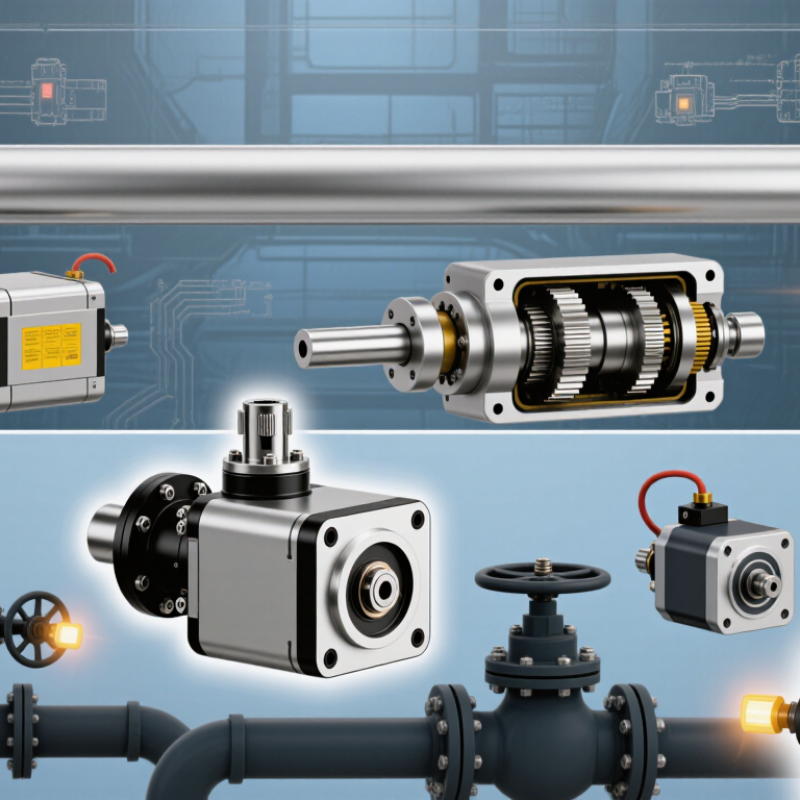
An electric actuator converts electrical energy into controlled mechanical movement. It may push a valve stem in a straight line or rotate a damper shaft through a measured angle. The actuator does not create a command by itself; a controller or operator supplies one. Simple, but important.
When a signal arrives, an internal motor turns. A gearbox can reduce speed and increase torque, while a screw, rack, or similar mechanism shapes the movement. In a linear actuator, the mechanism extends or retracts a rod. In a rotary model, it turns an output shaft. The command may be a switched signal, an analog setpoint, or a network message. For precise positioning, the controller compares the requested position with sensor feedback and adjusts movement. That loop can hunt if tuning, backlash, or load assumptions are poor. The details vary.
In practical installations, sizing starts with the load, travel, operating speed, and duty cycle. A valve that moves rarely has different needs from a damper cycling all day. A sticky valve may need more breakaway torque than its normal running torque. Engineers also check supply voltage, enclosure protection, temperature, and behavior during power loss. A handwheel may help during maintenance, but it cannot replace safe isolation procedures. One overlooked detail: mounting alignment. A slight mismatch can add friction, raise motor current, and shorten service life. Bench tests help, yet field wiring and load conditions still deserve careful verification.
Electric actuators mainly fall into linear, quarter-turn rotary, and multi-turn rotary types. Linear units move a rod or carriage along a straight path, making them useful for presses, valves, and adjustable machine guards. Quarter-turn models rotate a shaft through a limited angle, often 90 degrees, while multi-turn designs make repeated rotations for applications such as gate valves. Electromechanical cylinders combine a motor, screw, and guided rod; they can offer controlled positioning without compressed air. Small differences matter.
The right type depends on load, travel, speed, duty cycle, and the accuracy needed at the machine. The International Energy Agency’s report, Energy-Efficiency Policy Opportunities for Electric Motor-Driven Systems, estimates that these systems use about 45% of global electricity. That figure is not actuator-specific, but it underlines why efficient motor selection and control deserve attention. An actuator can be oversized, too. I have seen that choice create needless energy use and sluggish response.
Tips: Match the actuator to the actual force and movement, not just the catalog’s maximum rating. Check IP protection, feedback, and cycle life against the working environment. For example, a dusty packaging line may need a sealed linear actuator, while a compact damper may suit a quarter-turn unit. Leave a margin—but not an unexplained one.
What Are the Best Electric Actuator Types in 2026?
Electric actuators differ mainly in the motion they deliver. A linear actuator pushes or pulls a load in a straight line, such as a gate or positioning slide. A rotary actuator turns a shaft through a limited angle, often to operate a damper or quarter-turn valve. A multi-turn actuator rotates repeatedly, making it suitable for valves that need several turns to open or close. That distinction matters. A multi-turn unit is not simply a rotary actuator with a different label; its travel and control requirements are different.
Selection should start with the driven equipment, required force or torque, travel, and duty cycle. On a valve skid, for example, the wrong output can mean extra linkage, slower operation, or a poor fit. The U.S. Department of Energy’s 2014 Improving Motor and Drive System Performance sourcebook estimates that motor-driven systems account for about 68% of electricity use in U.S. manufacturing. That figure is not actuator-specific, but it underscores why sizing and control choices deserve care. A common specification mistake is focusing on motion type while overlooking load variation and feedback needs.
Tips: Check the valve or mechanism’s actual travel before specifying an actuator. Confirm torque or thrust across the full stroke, not only at startup. I would still verify the manufacturer’s duty-cycle limits; a neat calculation can miss real operating conditions.
The best electric actuator depends less on its label than on the motion a machine must perform. A valve usually needs controlled rotation or a quarter-turn. A sliding gate needs linear travel. Rotary actuators suit the first task; linear actuators suit the second. Simple distinction. But real installations add friction, changing loads, and limited space.
Start with force or torque, travel, speed, and positioning accuracy. A packaging line may need fast, repeatable movement, while a ventilation damper may prioritize steady positioning. Check how often the actuator runs and how long it must operate between rests. An undersized unit can overheat or stall. Oversizing wastes energy and money. Neither is a good shortcut.
The environment matters just as much. Dust, moisture, vibration, and temperature can affect service life and maintenance access. Confirm that the actuator’s enclosure and operating range fit the actual location, not just the equipment room. Then consider power supply, controller compatibility, feedback, and what happens during a power loss. Does the mechanism need to hold position, return to a safe position, or remain manually accessible? These details can change the suitable design. They are easy to miss on a specification sheet. A careful selection starts with measured loads and a clear duty cycle, then checks the complete actuator-and-control system.
| Actuator Type | Output Motion | Key Strengths | Considerations | Typical Applications | Best Fit When... |
|---|---|---|---|---|---|
| Electric linear screw actuator | Straight-line extension and retraction | Direct linear positioning; readily paired with limit switches, position feedback, and programmable controls. | Speed, thrust, duty cycle, and service life depend on the screw, motor, gearing, and load. Side loading may require external guidance. | Machine adjustment, lifting mechanisms, access panels, and positioning equipment. | A controlled linear stroke is needed and the load can be properly guided. |
| Electric quarter-turn actuator | Rotary motion, commonly about 90° | Well suited to opening and closing quarter-turn valves or dampers; can provide end-position indication and modulating control. | Verify required torque throughout the operating range, including breakaway torque, and check the required operating time and enclosure rating. | Ball and butterfly valves, dampers, and rotary indexing mechanisms. | The driven device needs limited-angle rotation rather than continuous rotation. |
| Electric multi-turn actuator | Multiple rotations of an output shaft | Designed for devices that require several turns; position, torque, and travel limits can be monitored by suitable controls. | Confirm turns per stroke, output torque, gearing, and whether the valve or mechanism requires a separate thrust unit. | Gate and globe valves, screw-driven mechanisms, and multi-turn positioning tasks. | The application requires repeated shaft rotation to move between end positions. |
| Servo actuator | Controlled rotary or linear motion | Closed-loop feedback supports accurate positioning, dynamic response, and coordinated motion when correctly sized and tuned. | Typically needs a compatible drive, feedback device, control setup, and attention to heat, inertia, and tuning. | Robotics, CNC equipment, packaging machinery, and precision automation. | Position accuracy, repeatability, or changing motion profiles are important. |
| Stepper-motor actuator | Incremental rotary or linear motion | Can move in commanded steps and is often practical for repeatable, lower-to-moderate-speed positioning. | Open-loop operation can lose position if the motor stalls or the load exceeds available torque; torque generally decreases as speed rises. | Small automation systems, dosing equipment, instrument stages, and light-duty positioning. | Motion is predictable, loads are within the motor’s limits, and cost-effective step-based control is suitable. |
| Electric solenoid actuator | Short, rapid linear stroke | Simple direct switching action with fast response for short-stroke applications. | Stroke and force are generally limited compared with screw-driven actuators; coil heating and energized duty cycle must be checked. | Latches, small valves, interlocks, and release mechanisms. | A fast on/off action over a short distance is required rather than continuous positioning. |
No actuator type is universally best. Actual force or torque, speed, accuracy, duty cycle, and service life vary by design and operating conditions; confirm requirements against the selected unit’s technical data.
| Selection Factor | What to Determine | Why It Matters |
|---|---|---|
| Motion and travel | Linear stroke, rotation angle, number of turns, and required end positions. | The motion type must match the mechanism being driven. |
| Load and output | Required thrust or torque, including starting or breakaway loads, friction, and any safety margin appropriate to the design. | Undersizing can prevent movement or shorten service life; excessive sizing can increase cost and affect control. |
| Speed and operating time | Required linear speed, rotational speed, or time to complete a stroke. | Speed affects motor and gearbox selection, output capability, and process performance. |
| Positioning and control | On/off operation or modulating control; required accuracy, repeatability, feedback, and control-signal compatibility. | Simple switching, step-based movement, and closed-loop positioning call for different control arrangements. |
| Duty cycle and operating pattern | Starts per hour, operating duration, rest periods, and continuous or intermittent use. | Duty limits affect motor heating and allowable operating life. |
| Environment and protection | Indoor or outdoor installation, moisture, dust, temperature, vibration, corrosion, and any hazardous-area requirements. | The actuator enclosure, materials, and certifications must suit the installation environment. |
| Power and integration | Available supply voltage and current, wiring, controller or drive, feedback interfaces, and communication requirements. | Electrical and control compatibility is essential for reliable operation and system integration. |
| Installation and maintenance | Available space, mounting orientation, alignment, load guidance, access for service, and expected maintenance. | Good mechanical support and service access help prevent misalignment and simplify upkeep. |
| Fail-safe behavior and safety | Required response on power loss, manual operation needs, overload protection, and applicable machine or process safety measures. | The actuator and control system should leave the equipment in an acceptable state for the application. |
In 2026, the best electric actuator depends on the motion, load, and control required. For robotic arms and packaging lines, servo-driven rotary or linear actuators lead when speed and repeatable positioning matter. The International Federation of Robotics’ World Robotics 2024 reports 541,302 industrial robots installed worldwide in 2023. That scale reinforces the need for precise, controllable motion—not simply higher force. Stepper actuators can suit lighter, cost-conscious positioning, though missed steps under changing loads are a real trade-off.
541,302 industrial robots installed worldwide in 2023
For compact gates, dampers, and valve adjustments, electric linear actuators offer straightforward point-to-point movement. Quarter-turn or multi-turn electric actuators suit valves where controlled rotation is needed, especially when a site lacks compressed air. In buildings, motorized damper and valve control can support more responsive HVAC operation. The United Nations Environment Programme’s 2024 Global Status Report estimates that buildings and construction account for about 32% of global energy use. Small adjustments matter, but actuator choice alone will not fix a poorly tuned system.
32%
of global energy use
High-cycle machinery may benefit from servo actuators, while simpler lift tables and access panels often need only screw-driven linear units. Check duty cycle, backlash, enclosure protection, and what happens during power loss. A small actuator can stall under a load that looks modest on paper. I would not call one type the universal leader; installation conditions still decide the winner.
Linear actuators move a rod or carriage in a straight line. Quarter-turn units rotate a shaft through a limited angle, often 90 degrees. Multi-turn models make repeated rotations. Electromechanical cylinders combine a motor, screw, and guided rod.
A linear actuator is usually suitable because the gate needs straight-line travel. Check its force and stroke against measured loads. A catalog maximum alone can mislead.
It suits equipment that needs limited rotation, such as a compact ventilation damper. Confirm the required angle and torque. Small details matter.
Check load, travel, speed, positioning accuracy, and duty cycle. Also consider available space and friction. I would measure the real load again; estimates are easy to trust too much.
An undersized unit may overheat or stall during frequent operation. An oversized one can waste energy and money. Bigger is not automatically better.
Yes. Dust, moisture, vibration, and temperature can affect service life. A dusty packaging line may need a sealed enclosure. Check the actual location, not just the equipment room.
Feedback can support controlled positioning, while controller compatibility helps the actuator work with the machine. Check the power supply and control system together. Easy to overlook.
Decide whether the mechanism must hold position, move to a safe position, or remain manually accessible. The answer can change the suitable design. Recheck this requirement.
An Electric Actuator converts electrical energy into controlled mechanical motion, allowing equipment to move, turn, or adjust with precision. In 2026, common options include linear actuators for straight-line movement, rotary actuators for partial turns, and multi-turn actuators for applications requiring repeated rotation. Their operation and control needs vary, so understanding the motion, force, travel, and positioning required is an important first step.
The best actuator depends on the application’s load, operating speed, duty cycle, environment, accuracy requirements, and available power and control systems. Linear models suit tasks such as lifting or positioning, while rotary and multi-turn types are often appropriate for turning mechanisms or operating valves. Comparing these factors helps narrow the choices and select a reliable, efficient actuator that fits the task without adding unnecessary complexity.
